For decades, premium long-haul travel has been closely associated with widebody aircraft. Beyond lie-flat seats and sophisticated entertainment systems, their appeal also lies in the space surrounding the passenger: multiple aisles, larger galleys, more distributed lavatories and greater freedom to move around during a flight lasting several hours.
The arrival of the Airbus A321XLR is challenging that assumption. By combining intercontinental range with the economics and lower capacity of a single-aisle aircraft, the A321XLR enables airlines to bring nonstop long-haul services to markets that may not support a widebody. Yet it also raises a fundamental passenger-experience question: can an airline reproduce a genuinely premium long-haul journey when the seat may rival a widebody product, but the aircraft around it remains considerably smaller?
At the 2026 Farnborough Air Show, Flightreviews.net stepped aboard United's new premium-heavy A321XLR to examine that question. Rather than assessing the cabin simply as a new United product, the aircraft provides a tangible case study of the opportunities and compromises associated with the wider rise of single-aisle long-haul travel. As our evaluation took place on the ground, some aspects—including catering execution, service flow and the atmosphere during a full long-haul flight—will ultimately need to be assessed once the aircraft enters commercial service.
With a range of up to 4,700 nautical miles (8,700 km) and the ability to operate flights lasting up to approximately 11 hours, the A321XLR extends the single-aisle model into markets traditionally associated with widebody aircraft. It provides airlines with a lower-capacity, lower-trip-cost option for long-distance routes that may not support a larger aircraft. Rather than concentrating demand through major hubs, carriers can use long-range narrowbodies to open, test or sustain direct services between cities where passengers might otherwise need to connect through a larger airport.
United is not alone in pursuing this model. American Airlines already operates the A321XLR between New York-JFK and Edinburgh, illustrating how the aircraft can support a relatively long-and-thin transatlantic market. Meanwhile, IndiGo has deployed the type on nonstop services linking Mumbai and Delhi with Athens, as well as between Delhi and Istanbul. These examples show that the long-range narrowbody model is not limited to one airline or business strategy: it can support both legacy carriers pursuing premium international markets and lower-cost airlines expanding their point-to-point networks across continents.
For passengers, the appeal is clear. A direct flight can be preferable to a connection, particularly when the alternative is a less comfortable short-haul-style aircraft, or a lengthy transfer at a hub. The trade-off is that the more efficient narrowbody platform cannot fully reproduce the space, circulation, and shared facilities of a larger twin-aisle aircraft.
United's interpretation of the A321XLR places a particularly strong emphasis on premium travel. The aircraft accommodates 150 passengers across four seat categories: 20 Polaris Suites, 12 Premium Plus seats, 34 Economy Plus seats and 84 standard Economy seats. Nearly a quarter of its capacity is therefore allocated to Polaris and Premium Plus alone, making the aircraft a relevant test of how far premium products can be adapted to a single-aisle platform.
The cabin includes four lavatories: one at the front for the 20 Polaris passengers and three at the rear shared by the 130 passengers travelling in Premium Plus, Economy Plus and Economy. This distribution already illustrates one of the article's central distinctions: the individual seat may closely resemble a widebody product, while the infrastructure shared by passengers remains shaped by the limitations of a narrowbody.
The A321XLR's narrow fuselage uses a steep 49-degree herringbone layout to accommodate a full-length lie-flat bed in Business Class. United's Polaris suite is a proprietary adaptation of Elevate Aircraft Seating's Altitude platform, specifically tailored to maximise shoulder and elbow space within the narrowbody fuselage.
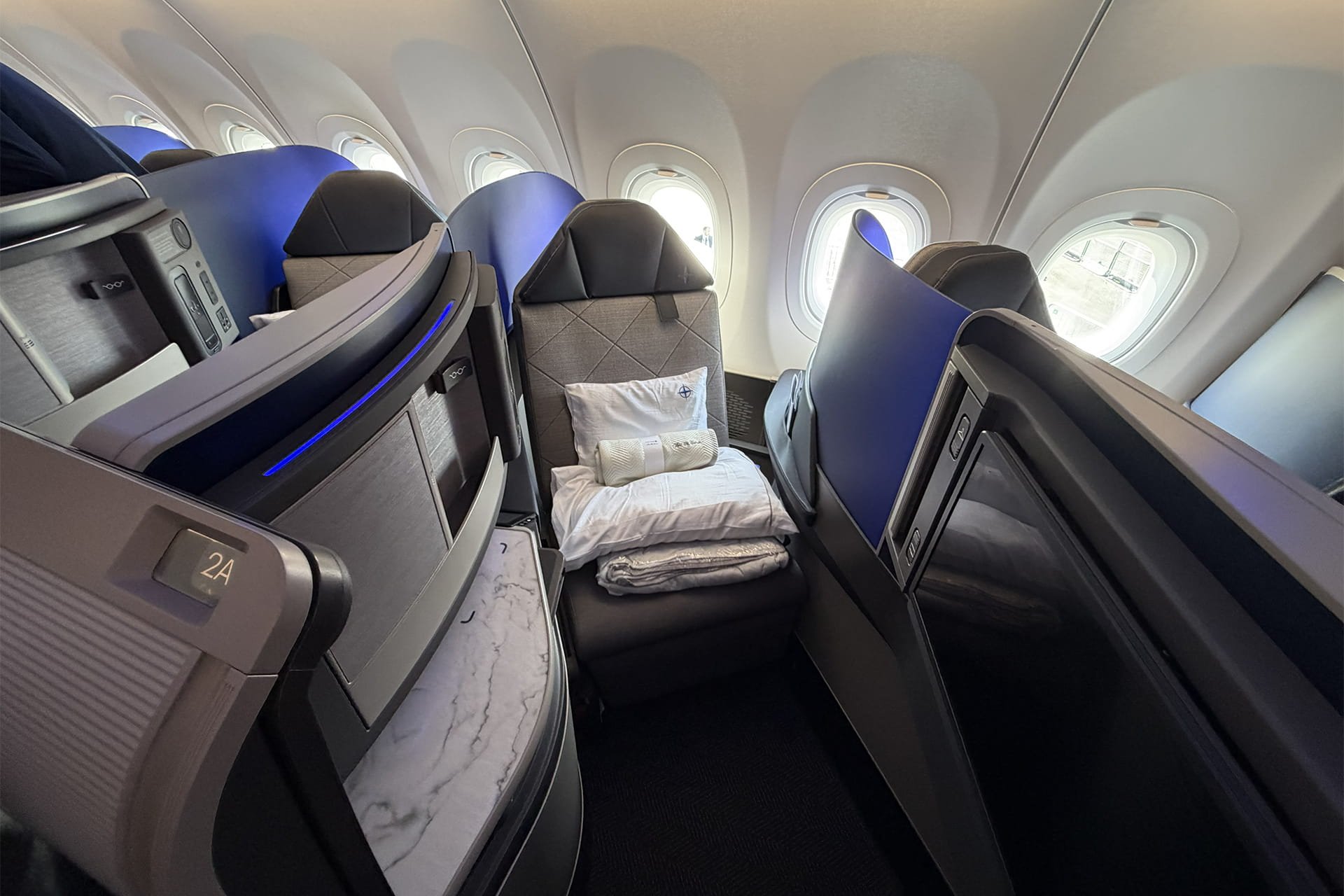
The seat translates United's premium design language through translucent royal-blue privacy dividers and details such as a marble-finished side table.
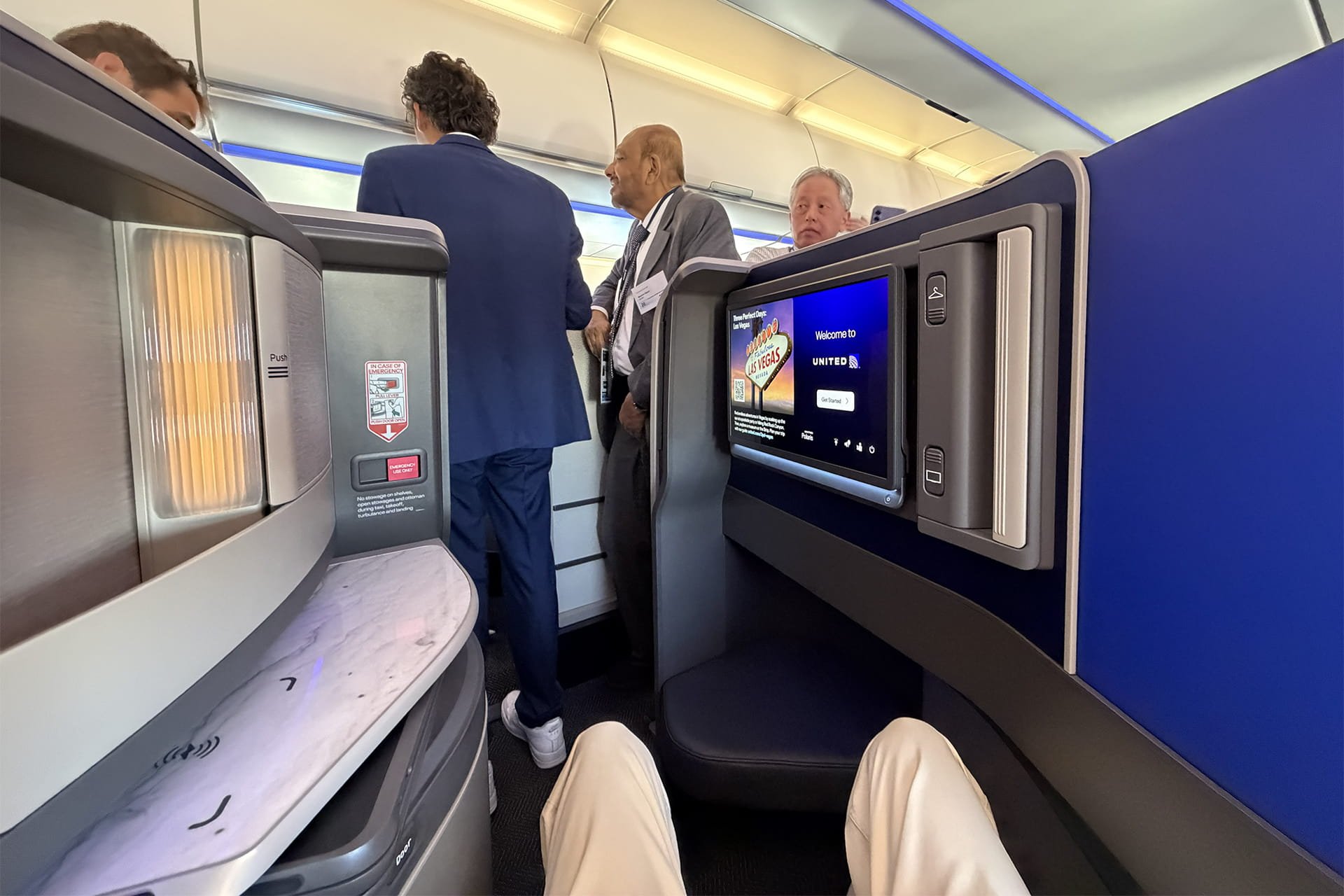
Each Polaris Suite features a two-metre (80-inch) lie-flat bed and a 19-inch 4K OLED display powered by Panasonic Avionics' Astrova in-flight entertainment platform. Bluetooth connectivity allows passengers to pair their own wireless headphones. A button beneath the coat hook releases the display, allowing passengers to adjust its angle. Once returned to its stowed position, the display locks mechanically into place.
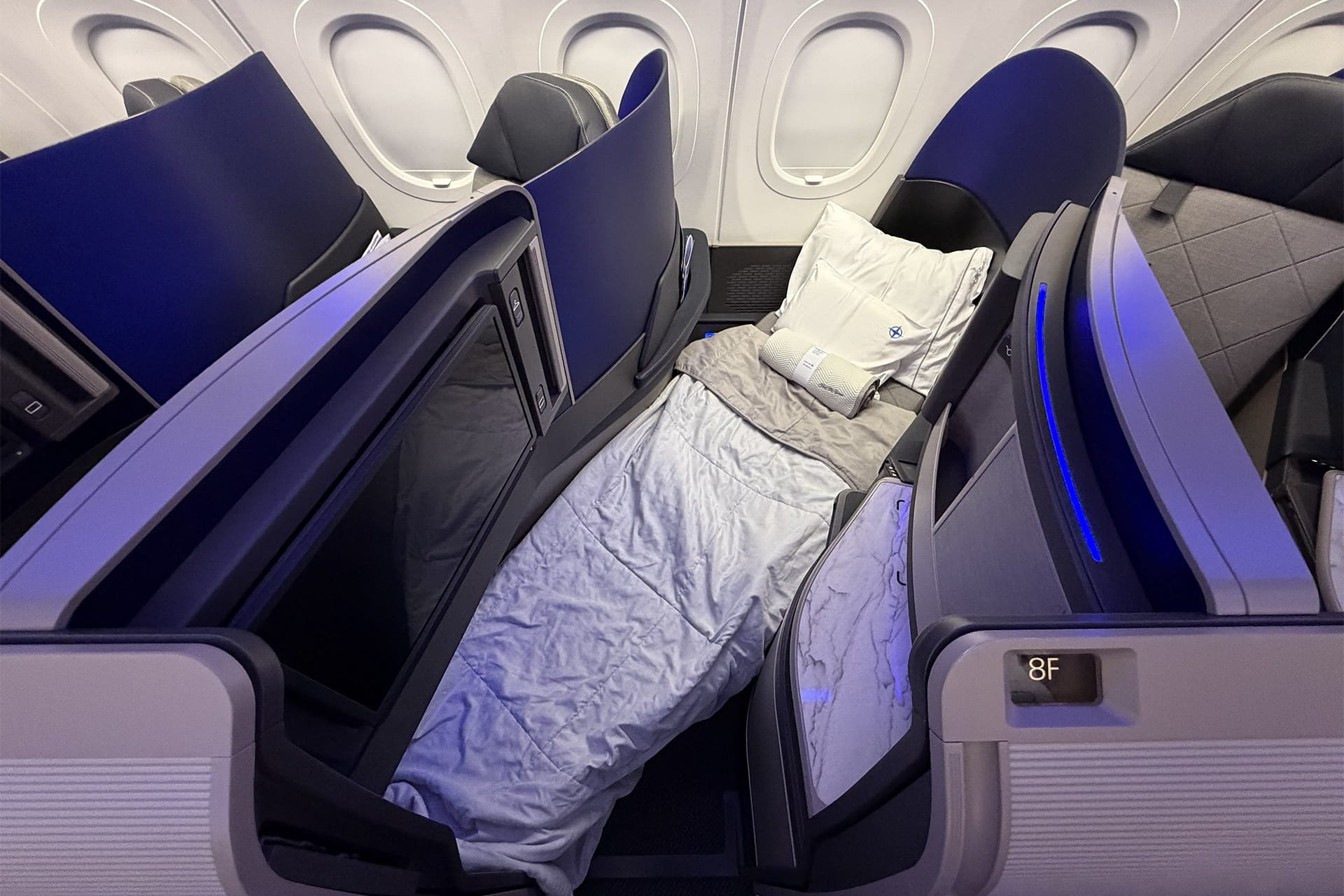
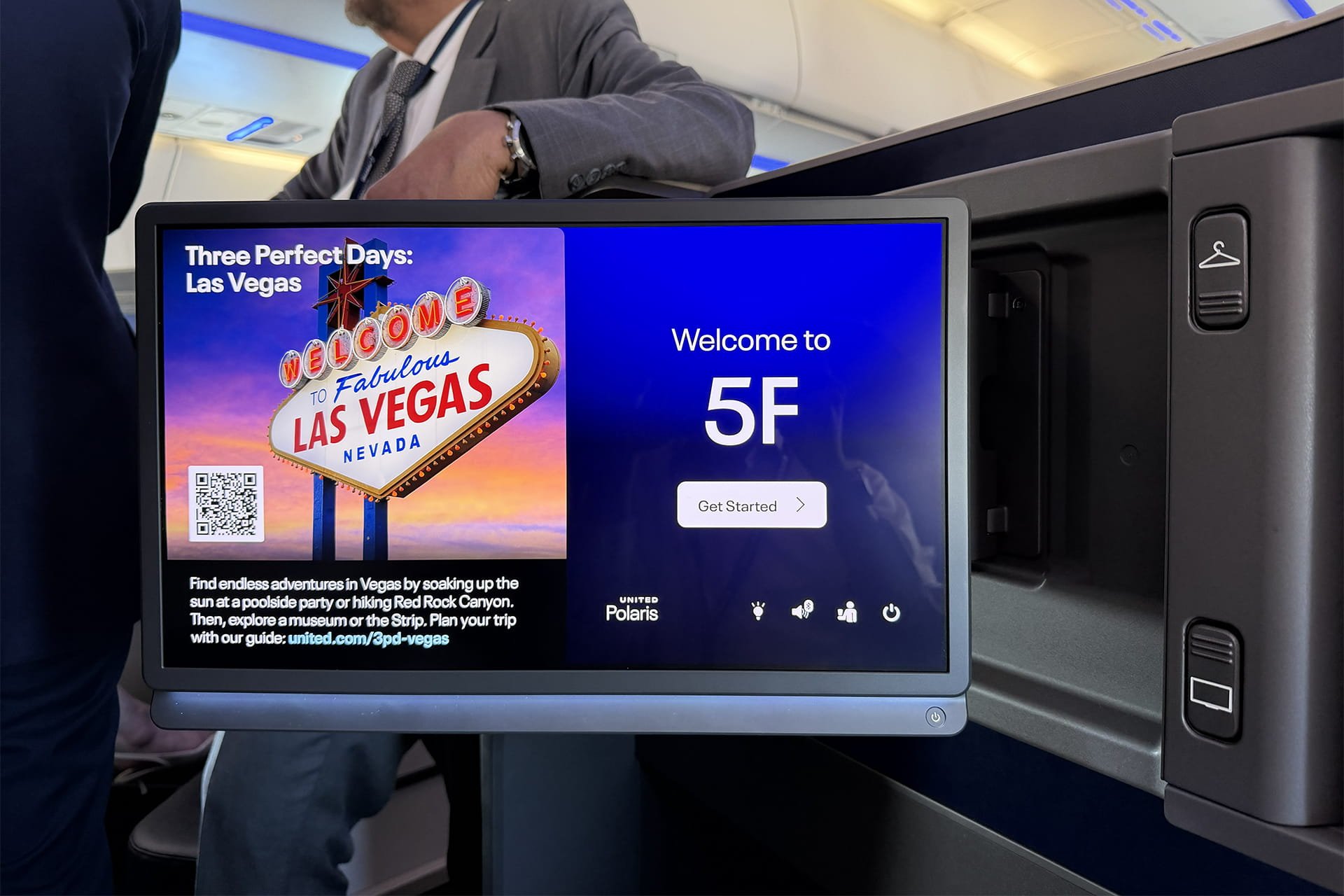
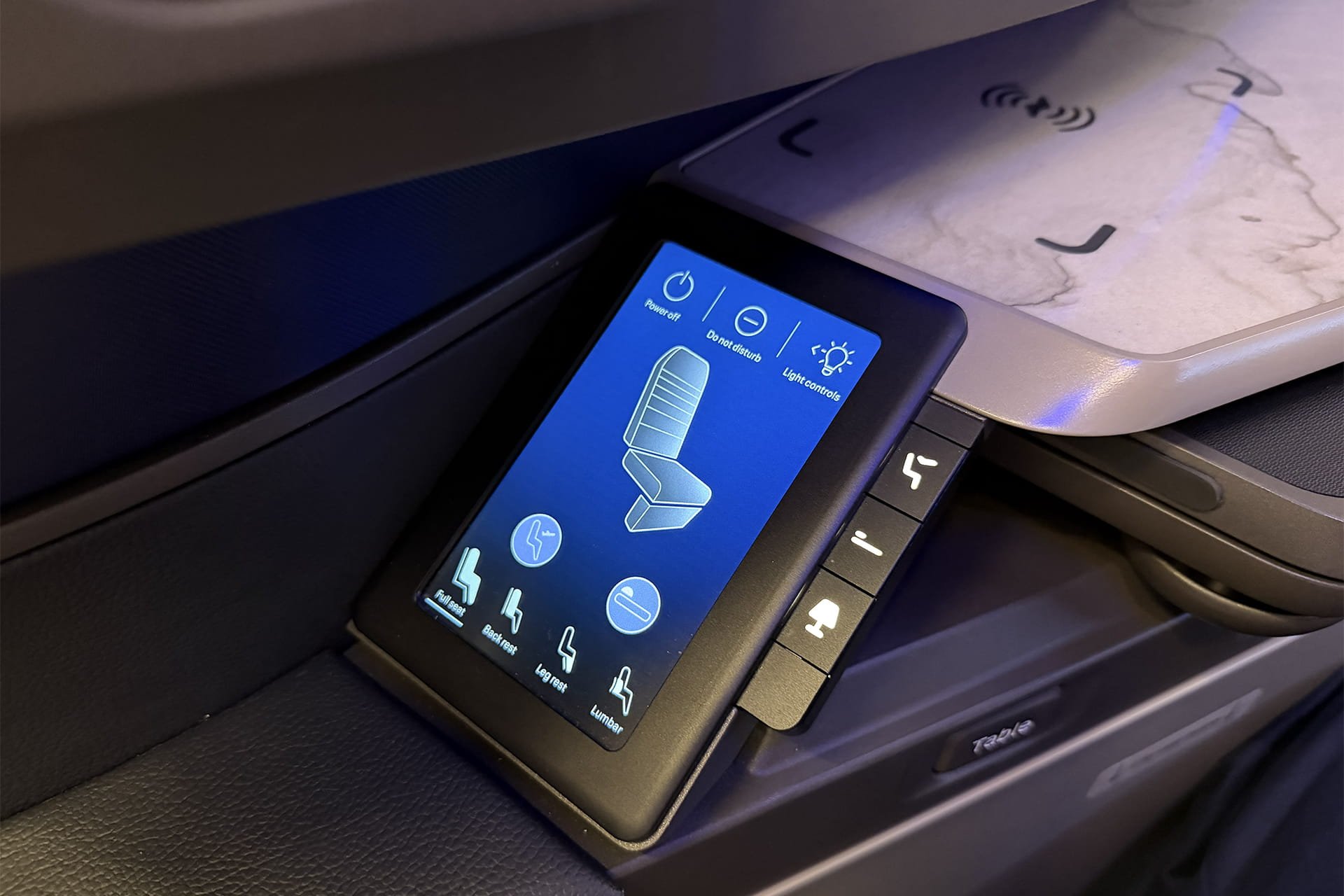
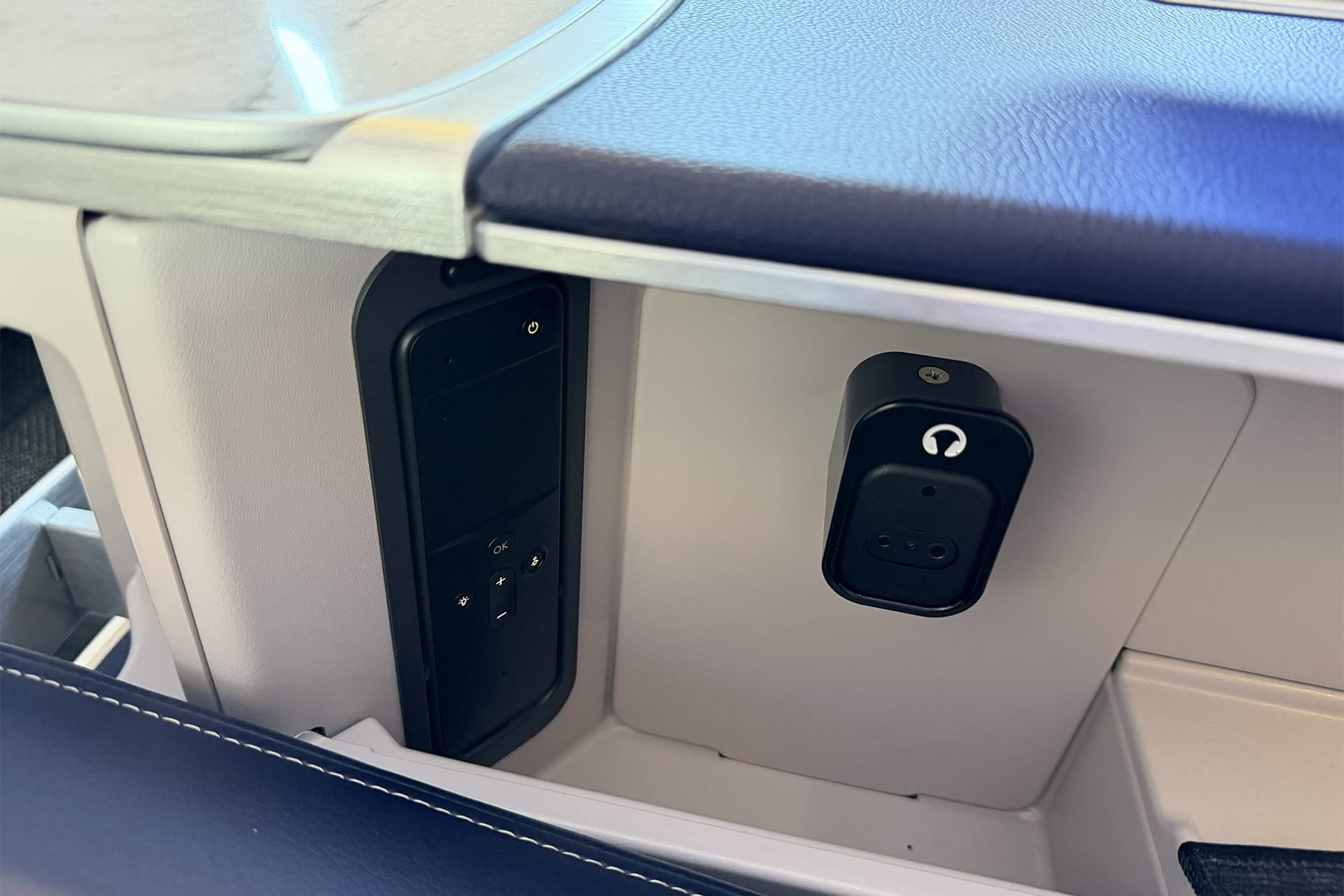
The side console contains an adjustable reading light, two USB-C ports, a universal power outlet and an IFE controller. The seat itself can be adjusted using a combination of touchscreen and physical controls, while the marble-finished side table incorporates a wireless charging pad.
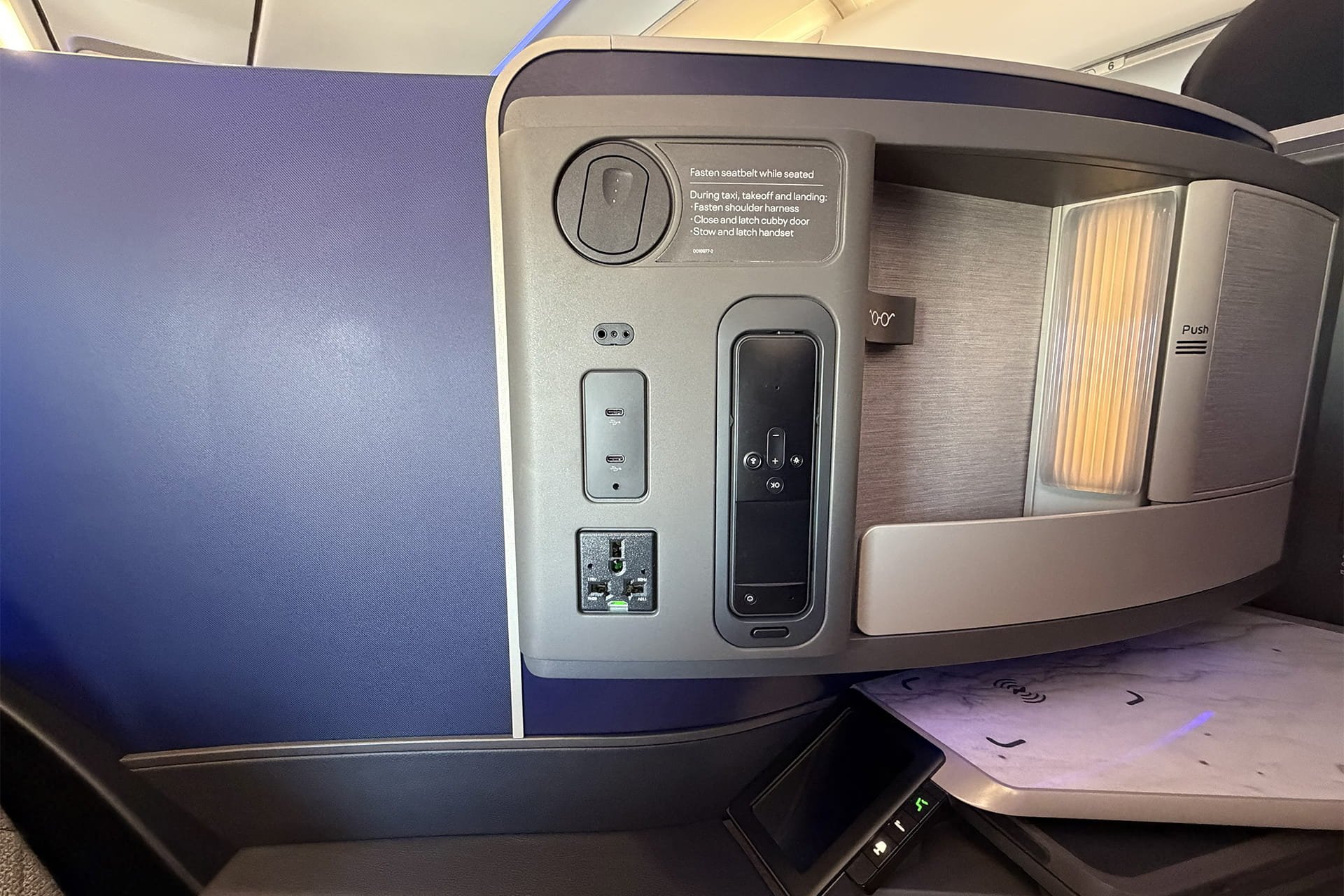
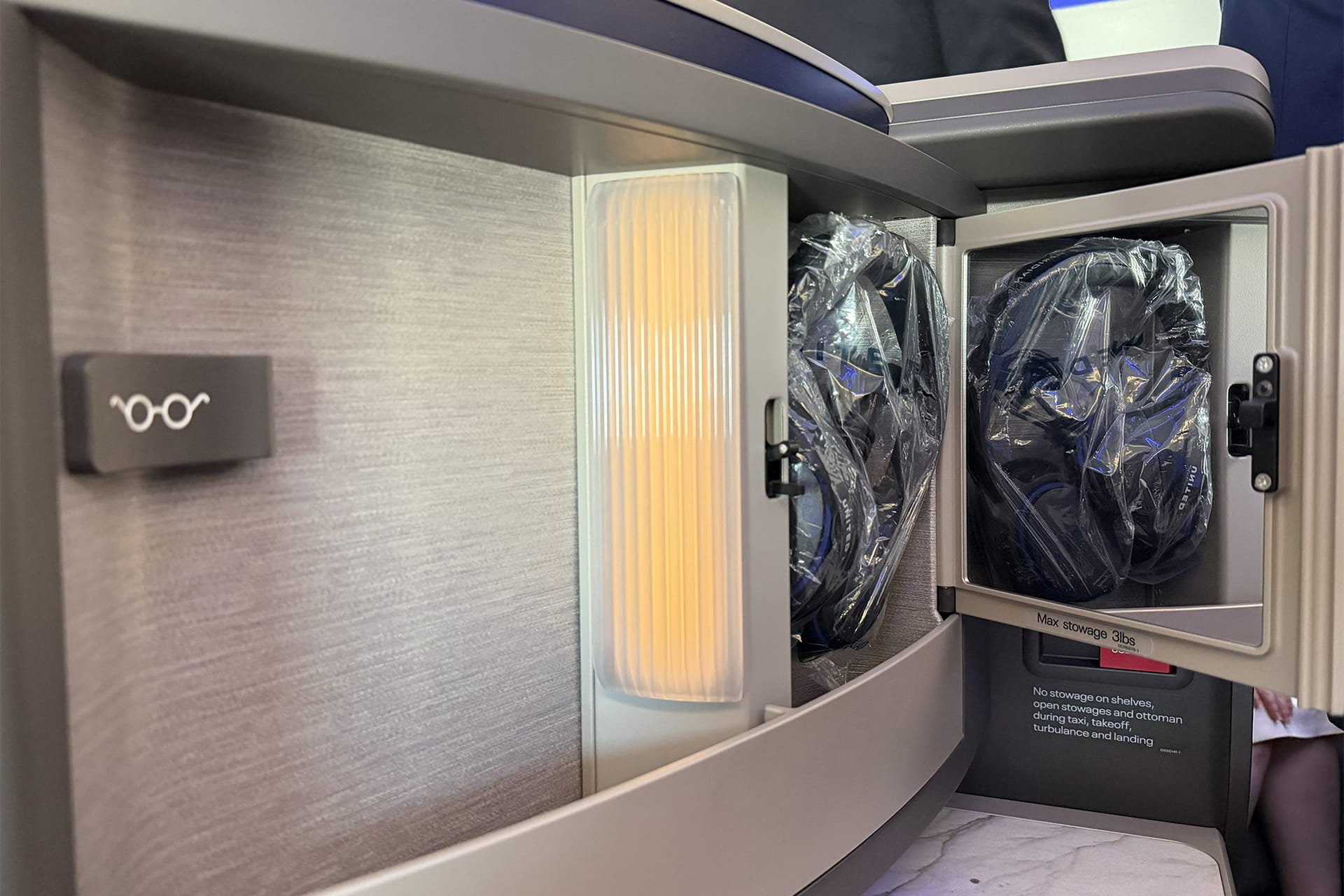
Each suite includes a dedicated spectacles hook, a small storage compartment, and an accent light reminiscent of a retro bulb. The enclosed cubby also includes a mini mirror and storage for in-flight headsets.
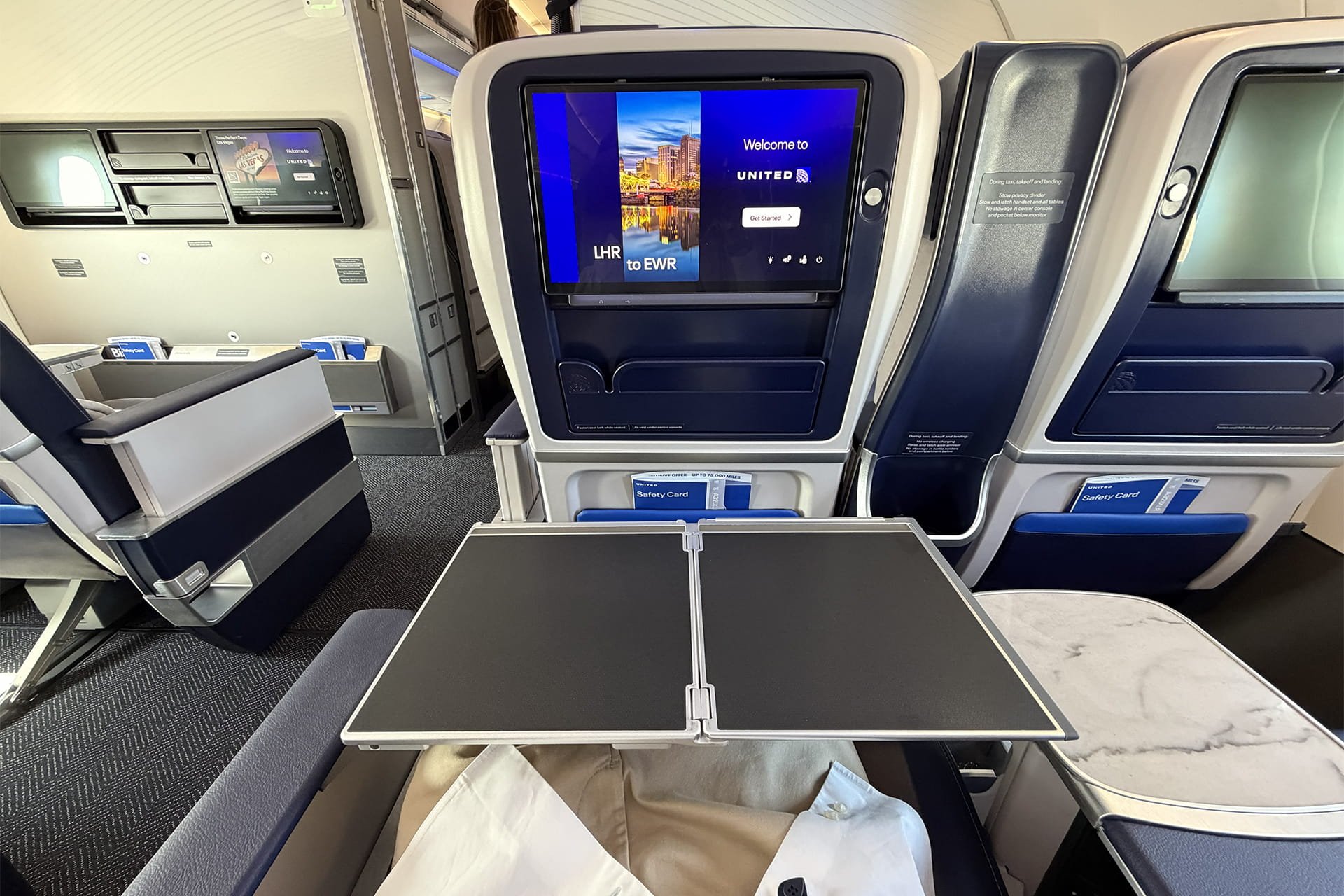
A concealed “Table” button mechanically releases a bi-fold dining table stowed beneath the marble-finished side table. When partially or fully unfolded, its metal support can also serve as a stand for a personal electronic device.
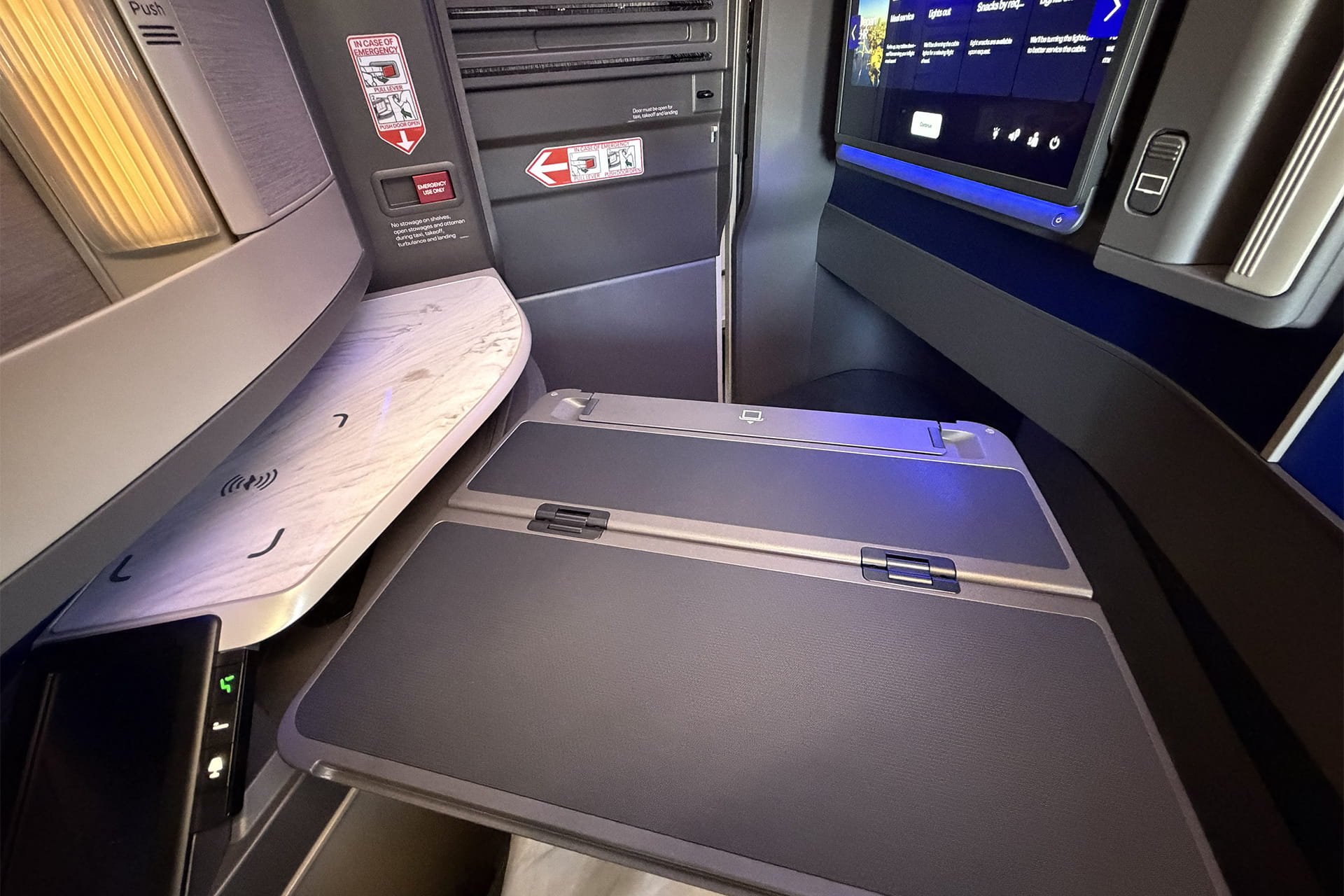
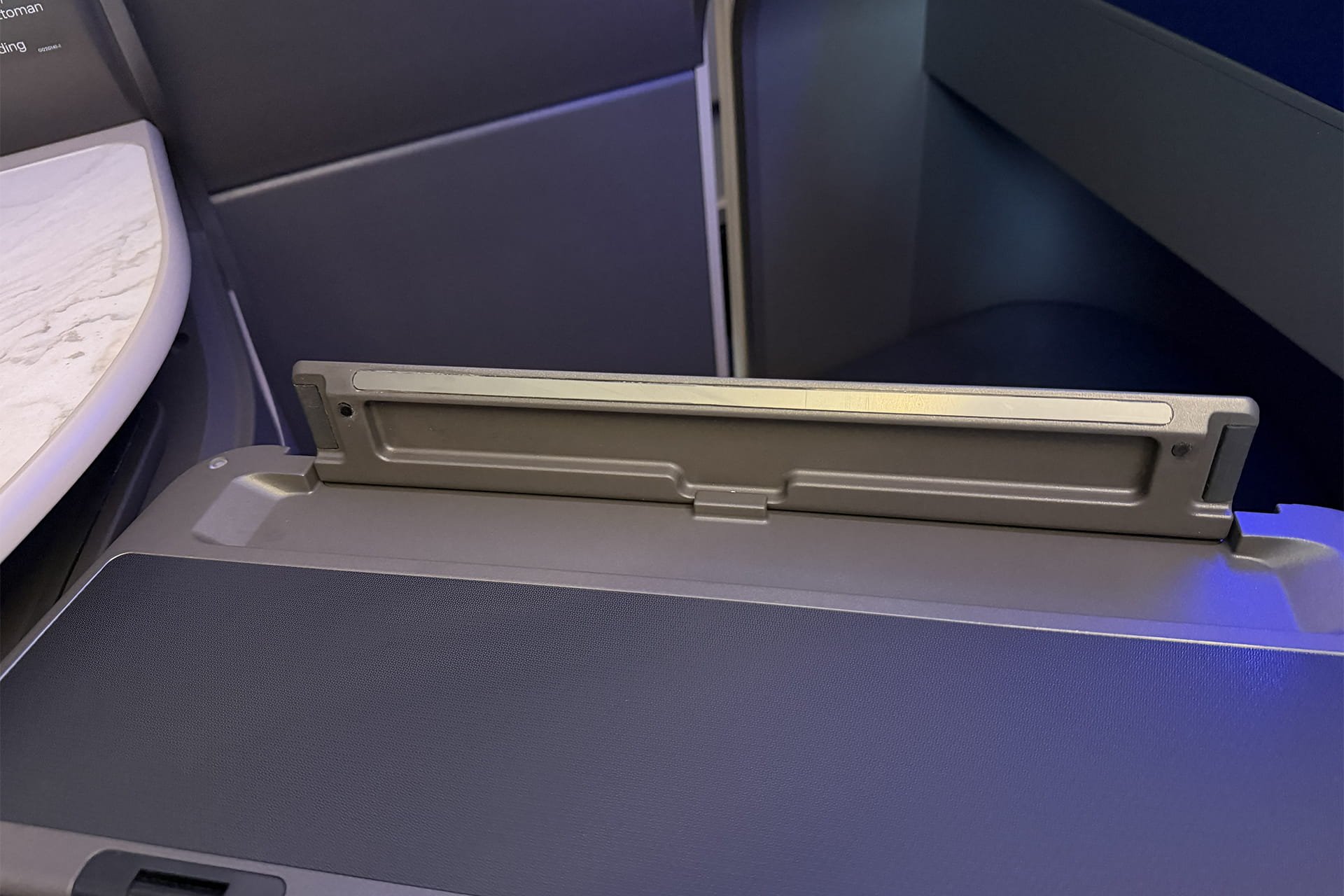
United has retained the core elements of a modern long-haul business-class product, but the narrower fuselage makes the trade-offs more visible than on a widebody.
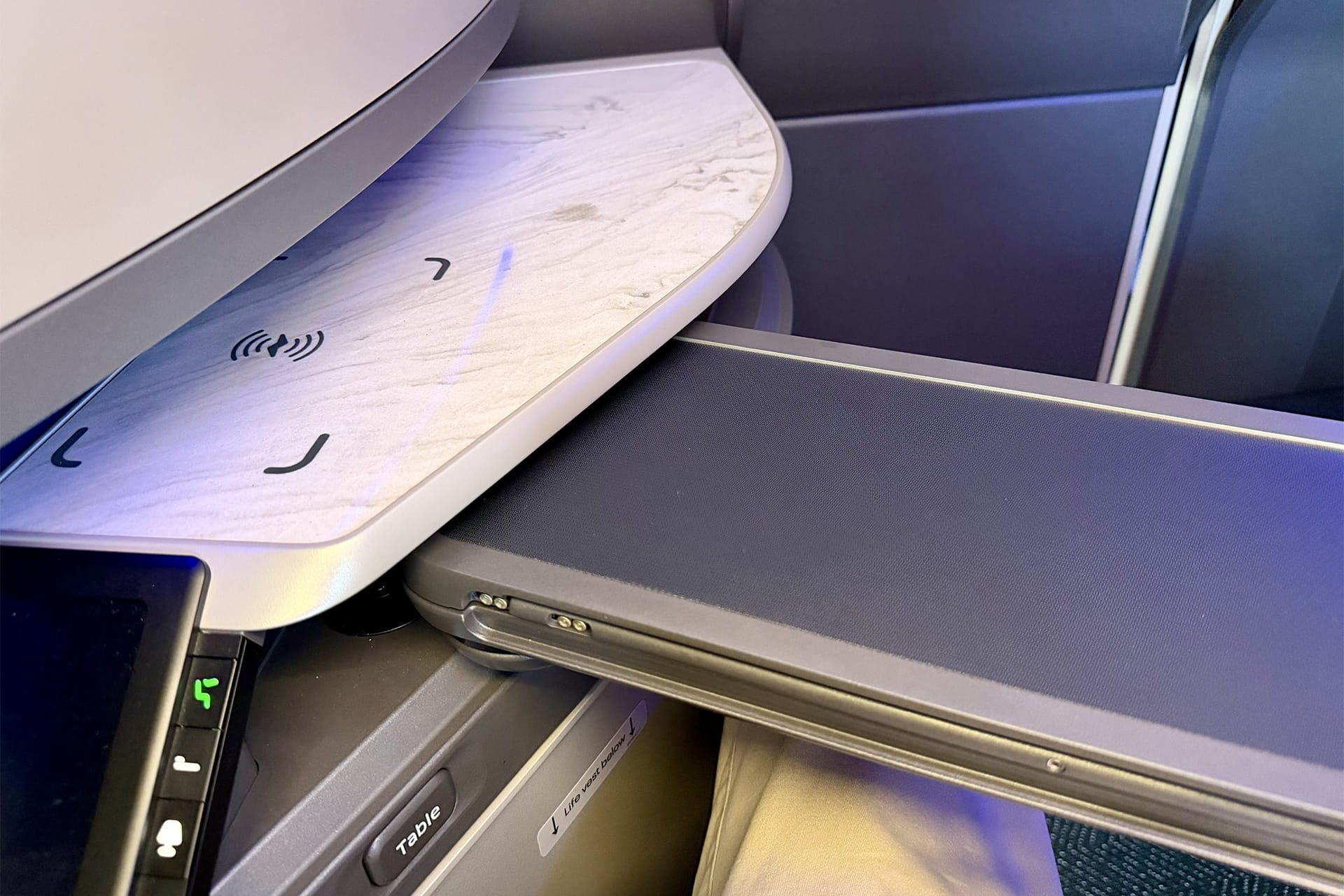
The table does not automatically release into its final position when the button is pressed. Once locked into place, it sits at a tight angle towards the passenger and blocks access to the aisle. By comparison, some current-generation widebody business-class products allow passengers to leave their seat while the dining table remains deployed. This distinction matters on a long flight when passengers may want to work, dine, or sleep without repeatedly stowing the table.
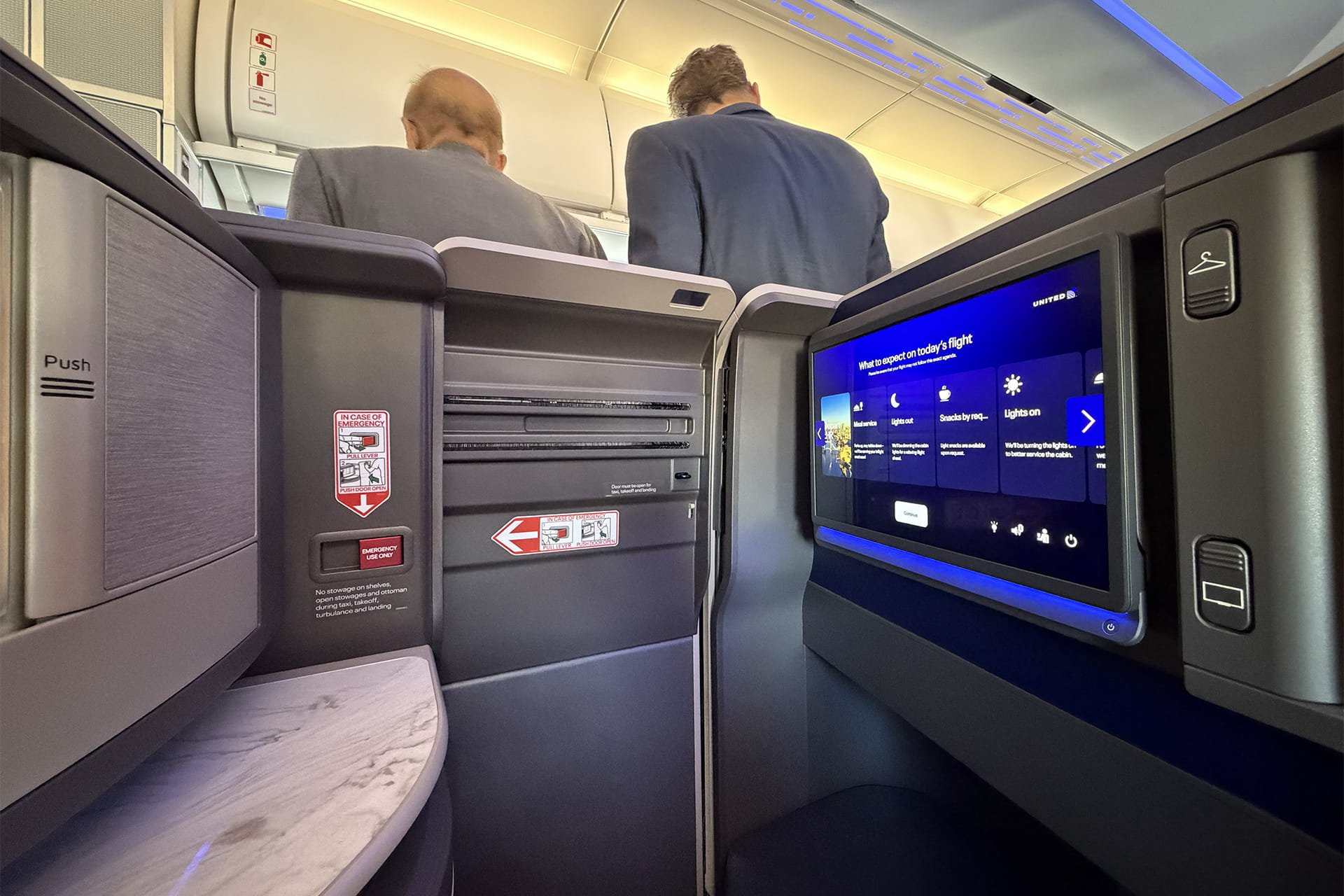
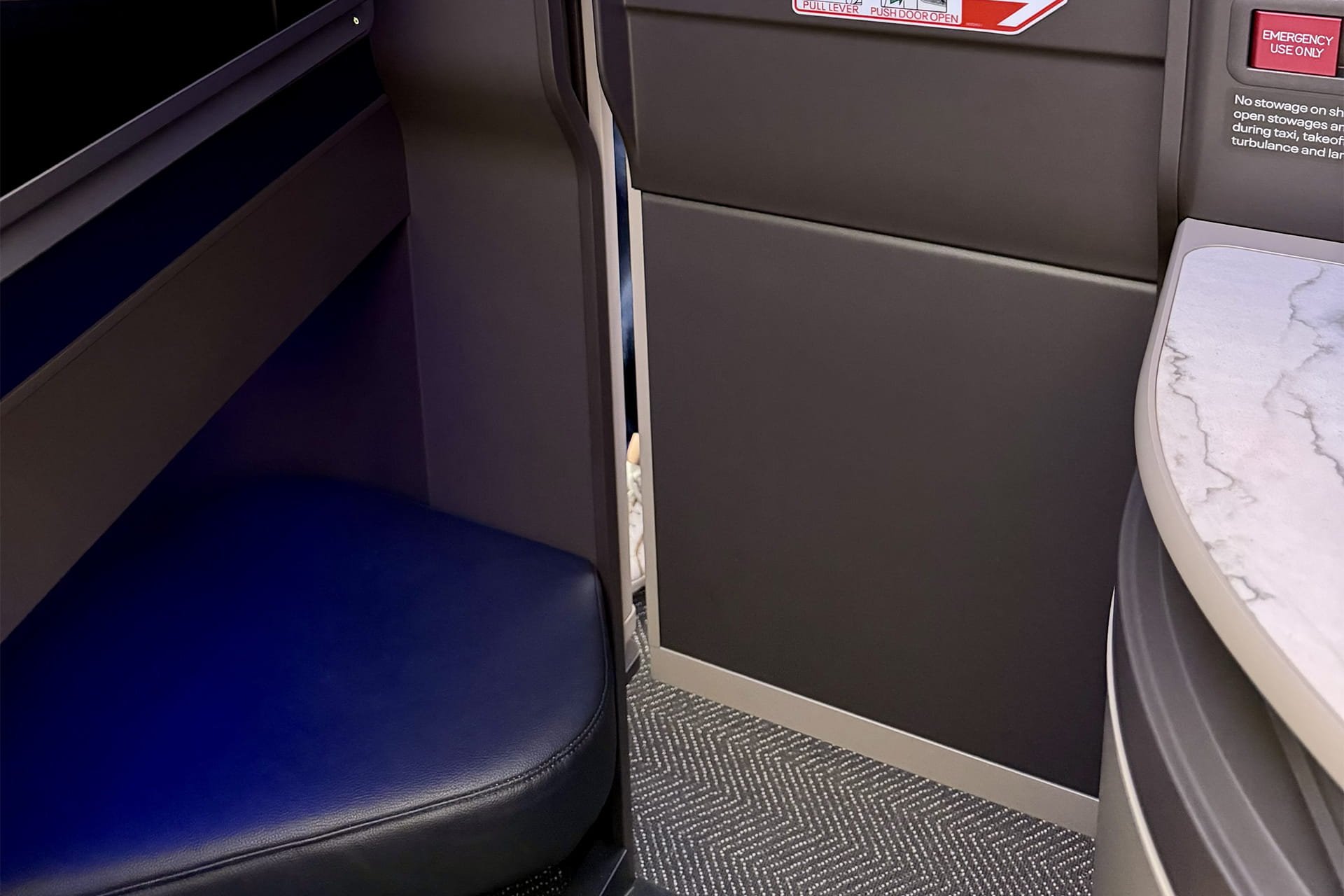
Polaris on the A321XLR also features a sliding door for the first time. It does not close fully and leaves a sizeable gap above the floor, so it provides visual separation rather than the enclosed privacy associated with many widebody business-class suites. This is particularly noticeable when the bed is deployed, as the sleeping surface faces outward towards the aisle.
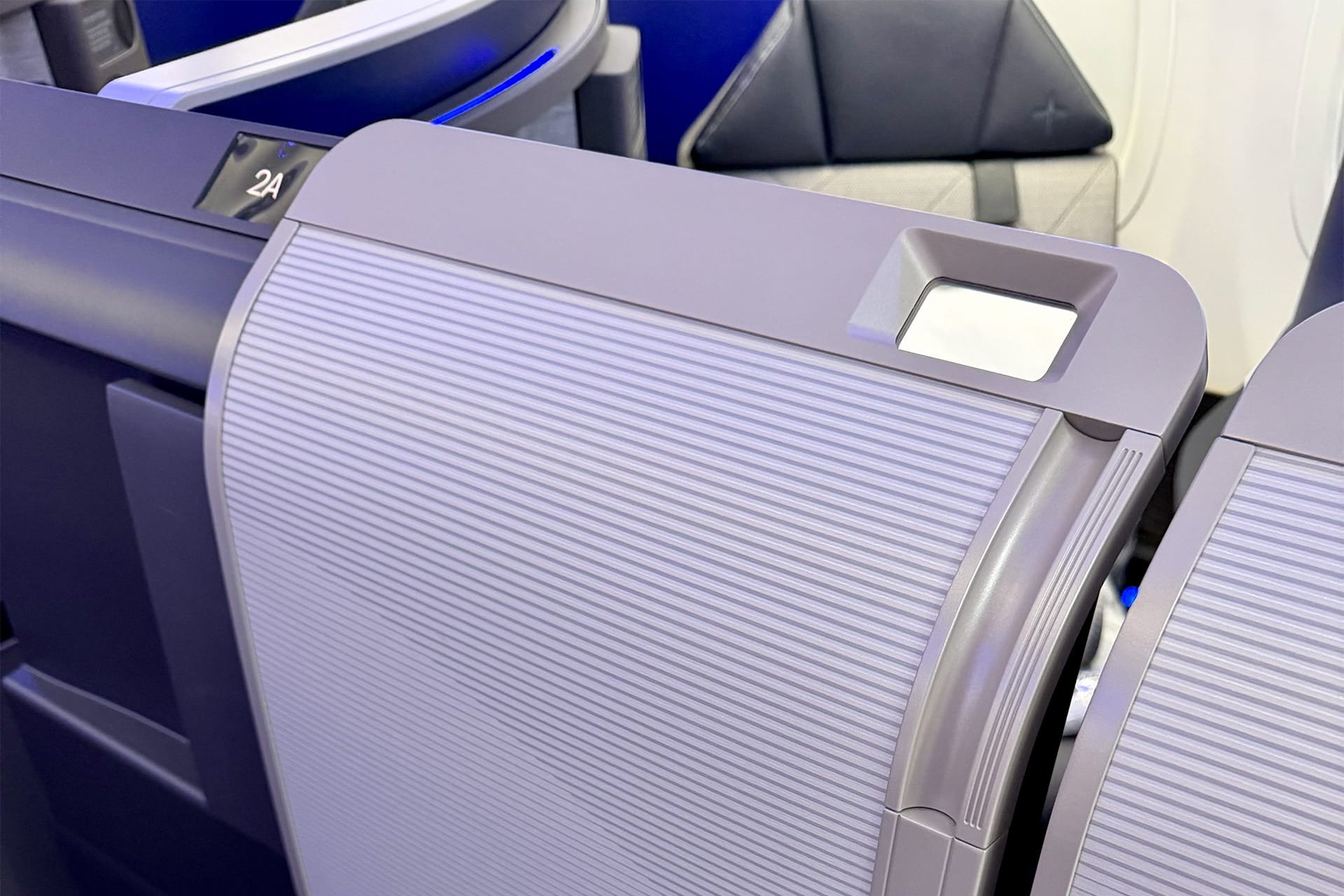
United's Premium Plus cabin contains 12 Collins Aerospace MiQ seats arranged across three rows in a 2-2 configuration.
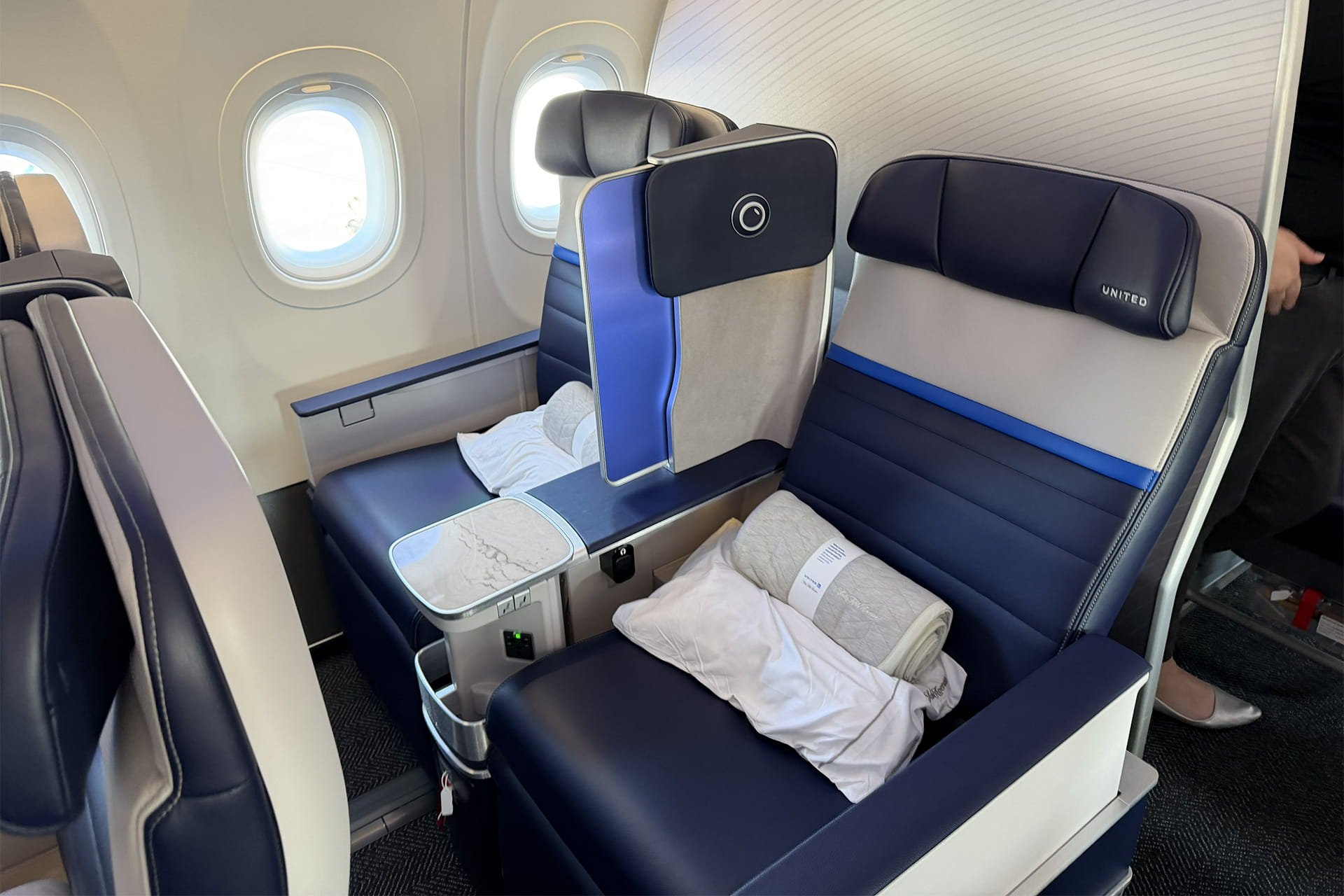
MiQ is a platform designed for both premium economy and regional business-class applications, and its use aboard the A321XLR provides each passenger with a wider reclining seat, a legrest and a footrest. With 96 cm (38 inches) of pitch, the product offers legroom comparable with many long-haul premium economy cabins, while the 2-2 layout eliminates the middle seats commonly found in wider 2-3-2 or 2-4-2 configurations.
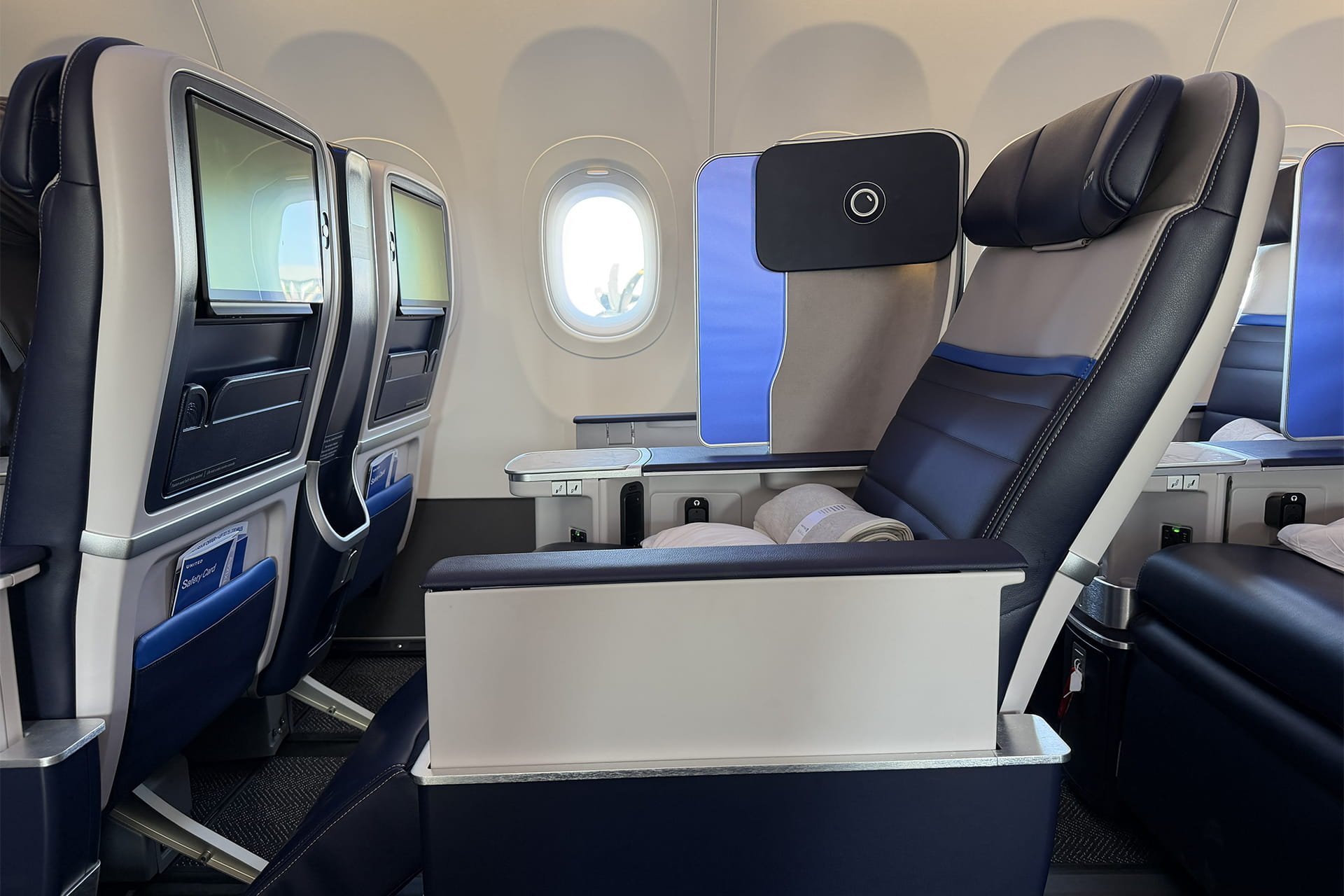
Each Premium Plus seat features a 16-inch 4K OLED display running the same Astrova entertainment platform from Panasonic Avionics offered throughout the aircraft. Bluetooth connectivity allows passengers to pair their own wireless headphones, while two USB-C ports are positioned beneath the screen. Each seat also includes a universal power outlet beneath the centre armrest, leaving sufficient space for a device while it is charging.
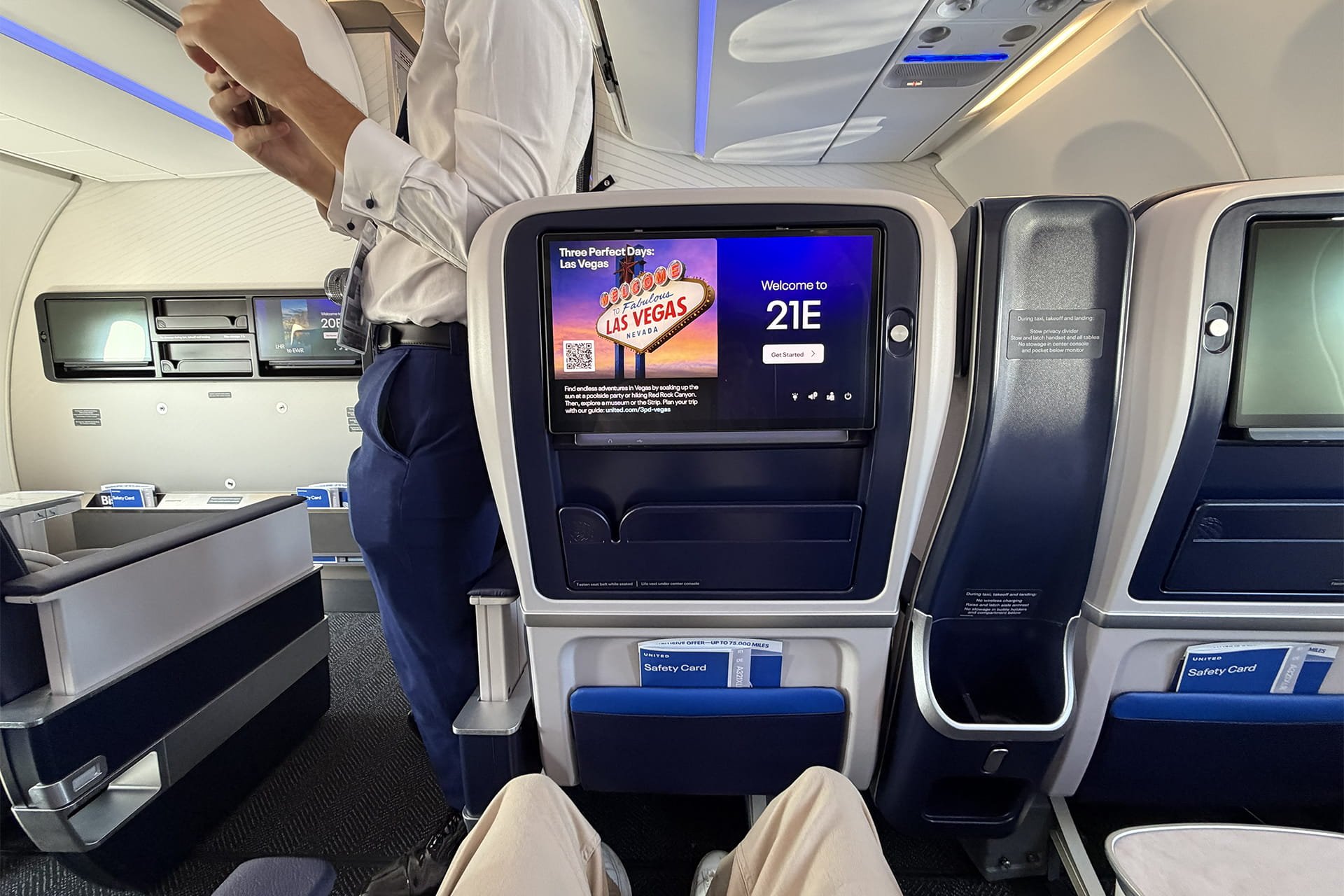
Storage is distributed across several areas of the Premium Plus seat: a slim compartment at the front, a shared space between the two passengers for drinks and small personal items, and a small recess integrated into the centre armrest.
A matte, opaque divider in United blue separates each pair of seats. It extends only a limited distance, offering modest privacy between seatmates.
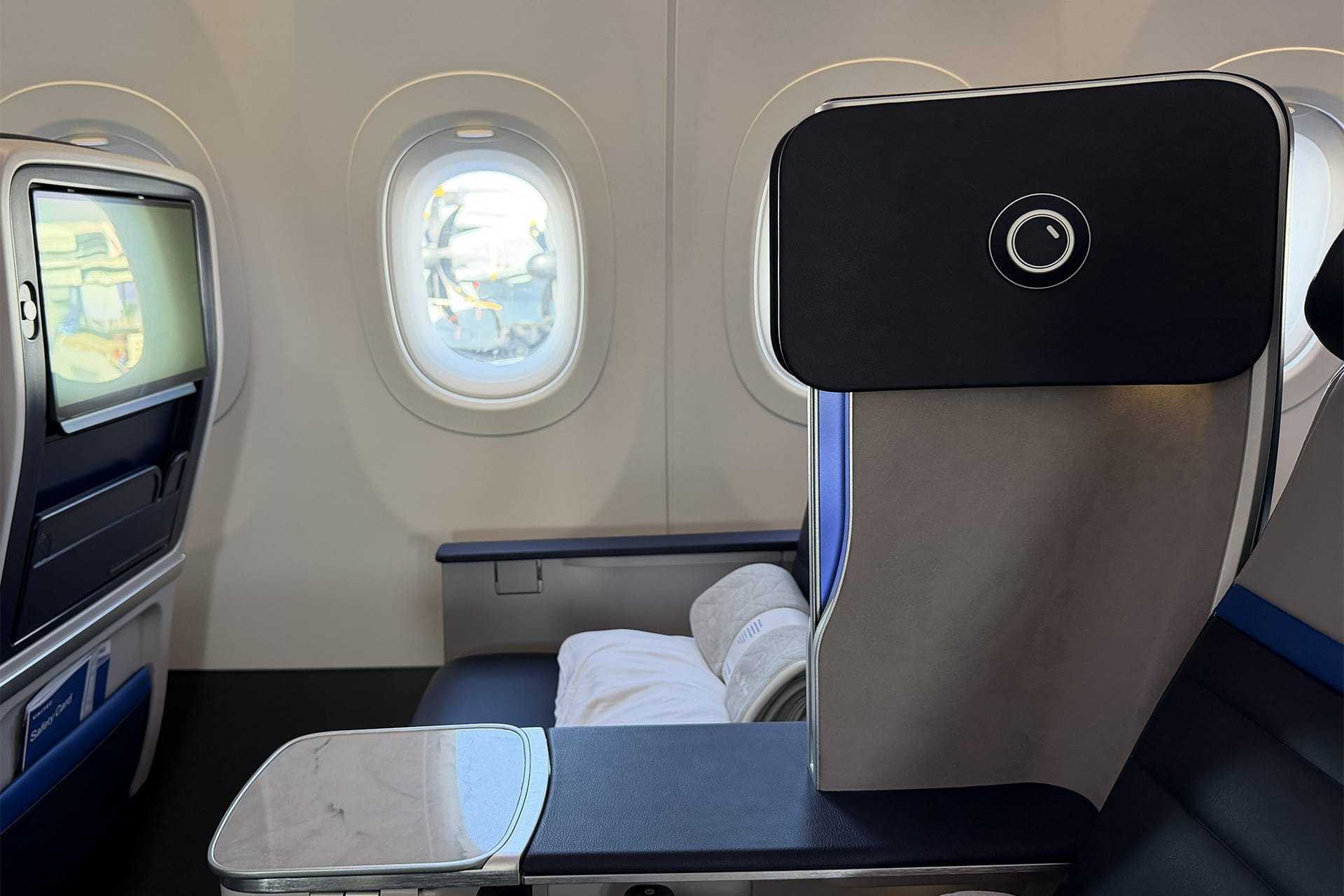
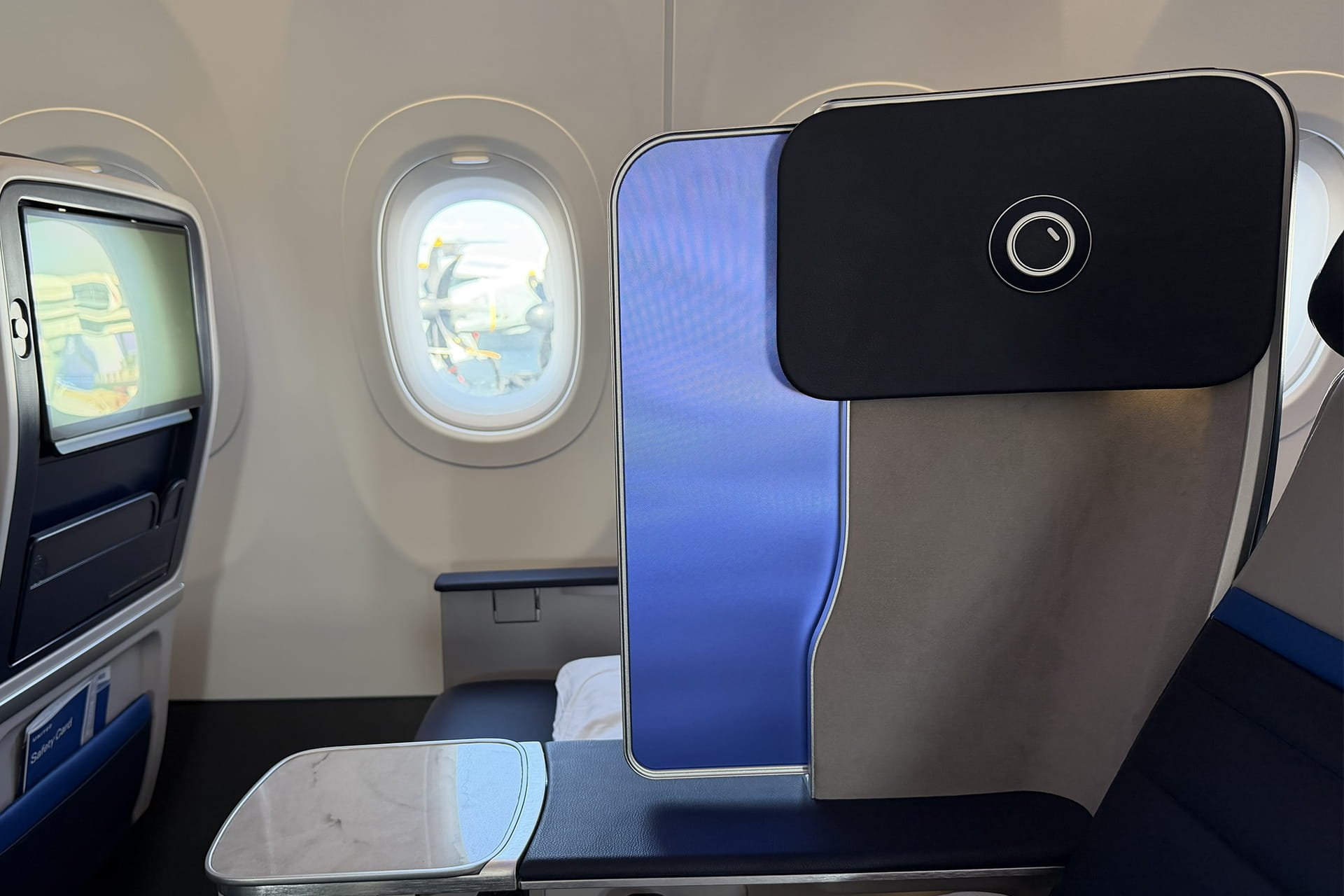
A multi-directional reading light is positioned beside the divider, while the bi-fold tray table is stored inside the opposite armrest.
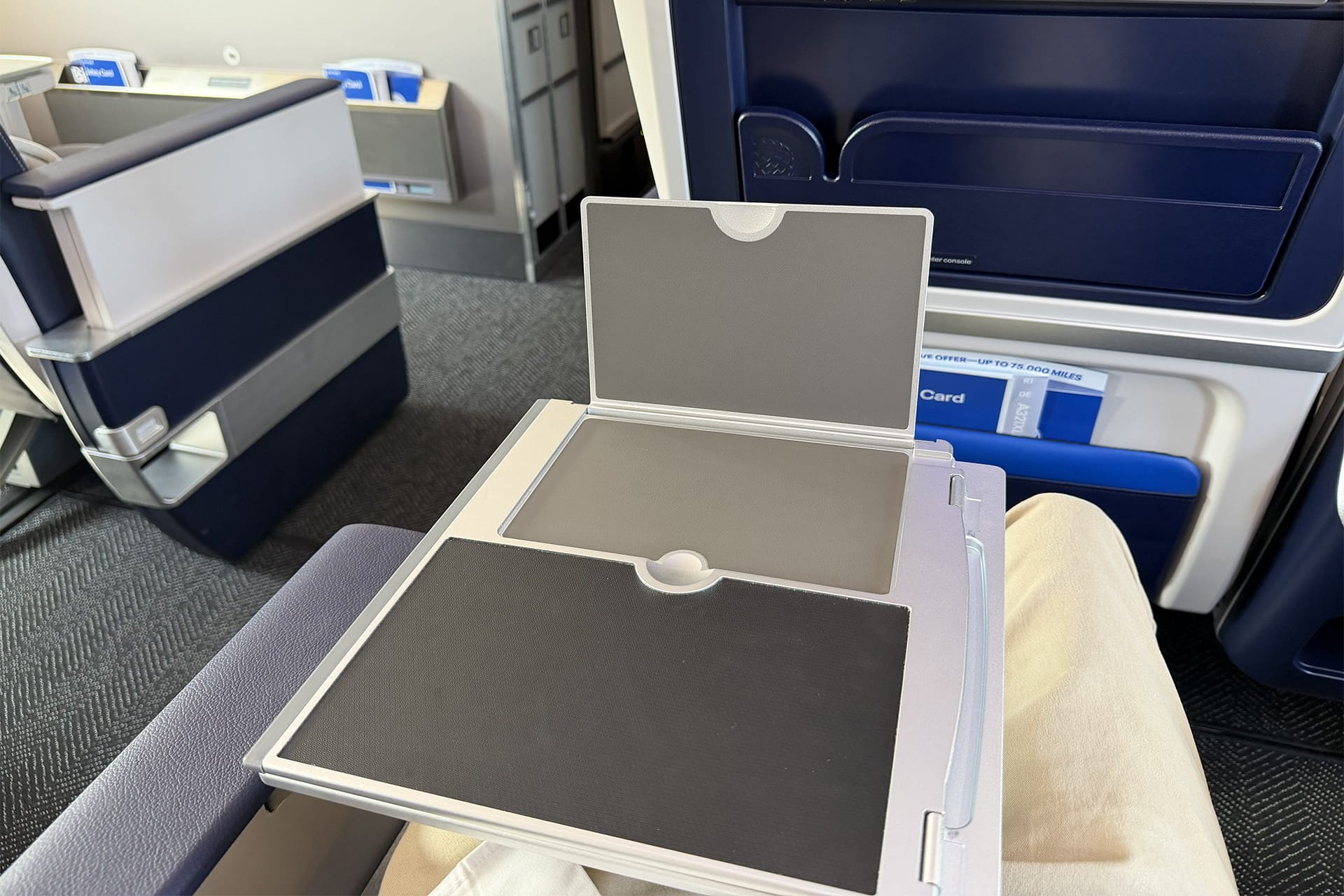
Premium Plus's small 12-seat cabin may also create a more intimate atmosphere than some widebody premium economy layouts. The limitation is not the seat itself but the shared infrastructure around it. Premium Plus has no dedicated lavatory, leaving passengers dependent on the three rear facilities shared with the main cabin. That arrangement is not unusual on a narrowbody, but may become more noticeable on a long sector than in a larger widebody cabin with more distributed facilities.
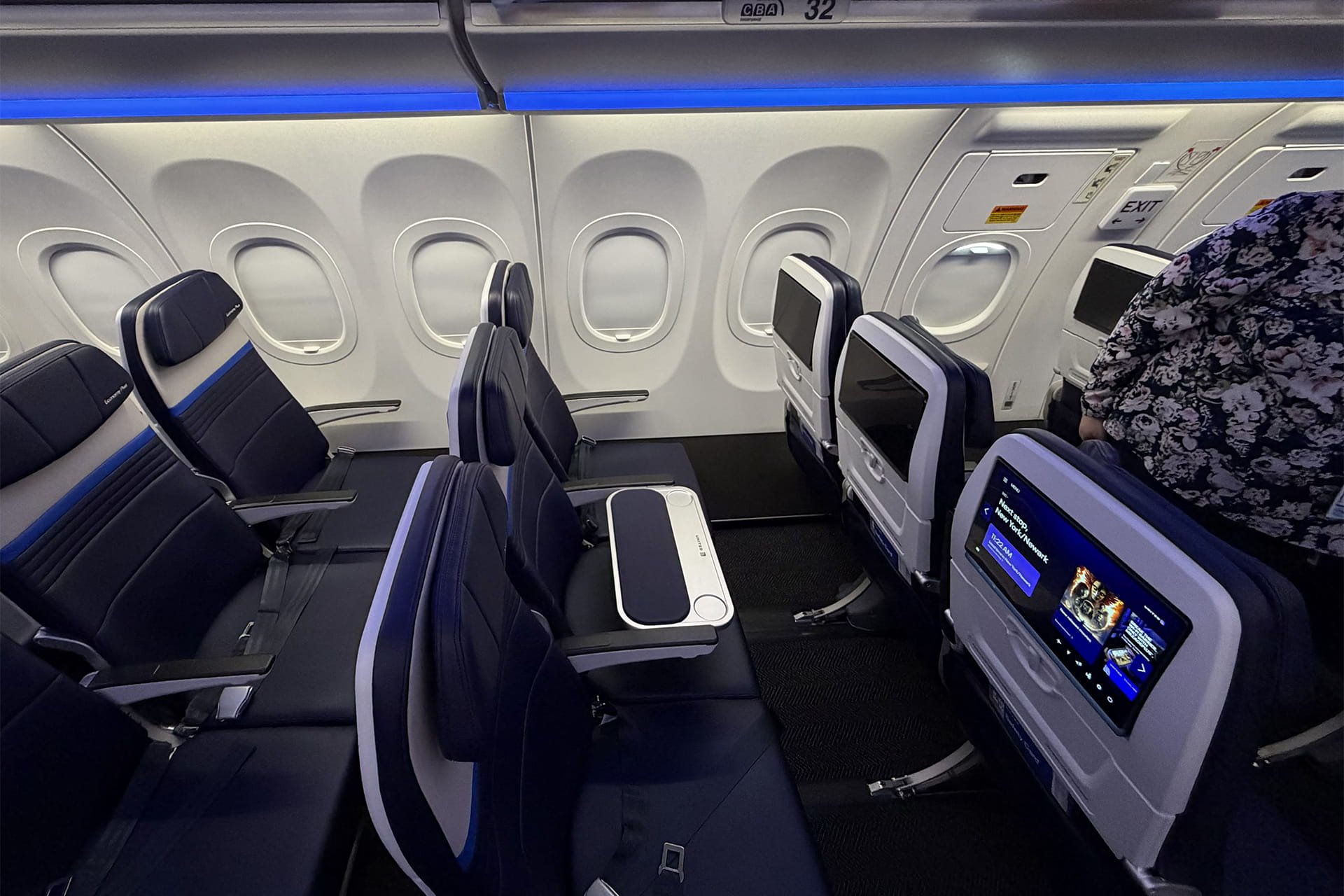
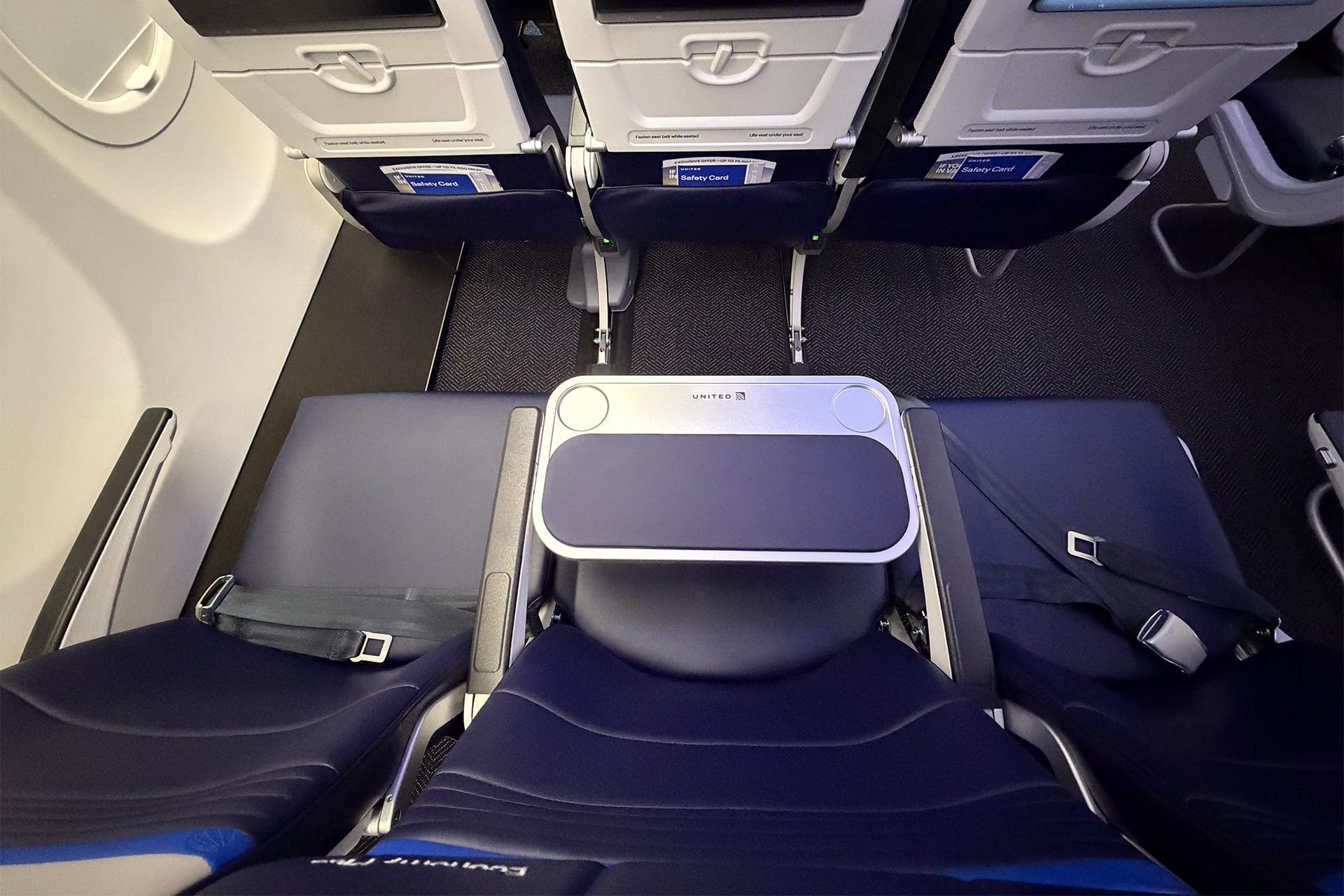
The main cabin uses Collins Aerospace's Meridian+ slimline platform across Economy Plus and Economy. Most seats are arranged in a conventional 3-3 configuration, while row 32 adapts the same platform by replacing the two middle positions with shared tables. United divides the cabin into three commercial offerings: the modified Economy Plus row with additional elbow room, five conventional Economy Plus rows offering extra legroom, and standard Economy. Although the underlying seat platform remains the same, the personal space available varies significantly between these options.
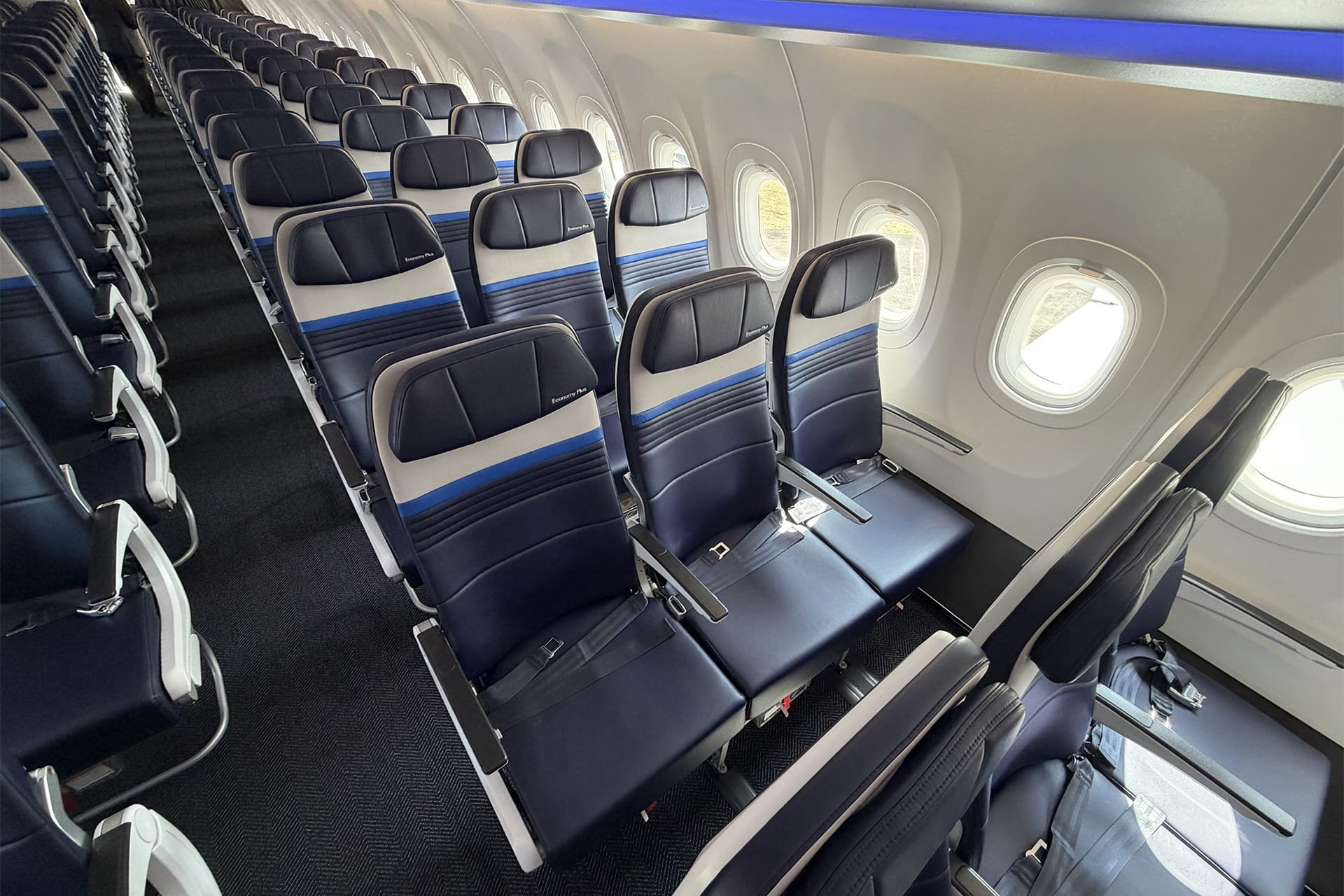
Row 32 offers the most distinctive interpretation of the Meridian+ platform. The concept resembles the Eurobusiness-style arrangement used by airlines such as British Airways and Lufthansa on short-haul routes, although United markets it as an enhanced Economy Plus option rather than a separate premium cabin. United plans to install the arrangement across its fleet of 50 A321XLRs and is considering extending the concept to other aircraft types.
The other five Economy Plus rows retain the standard six-abreast Meridian+ configuration but provide three additional inches of pitch compared with regular Economy.
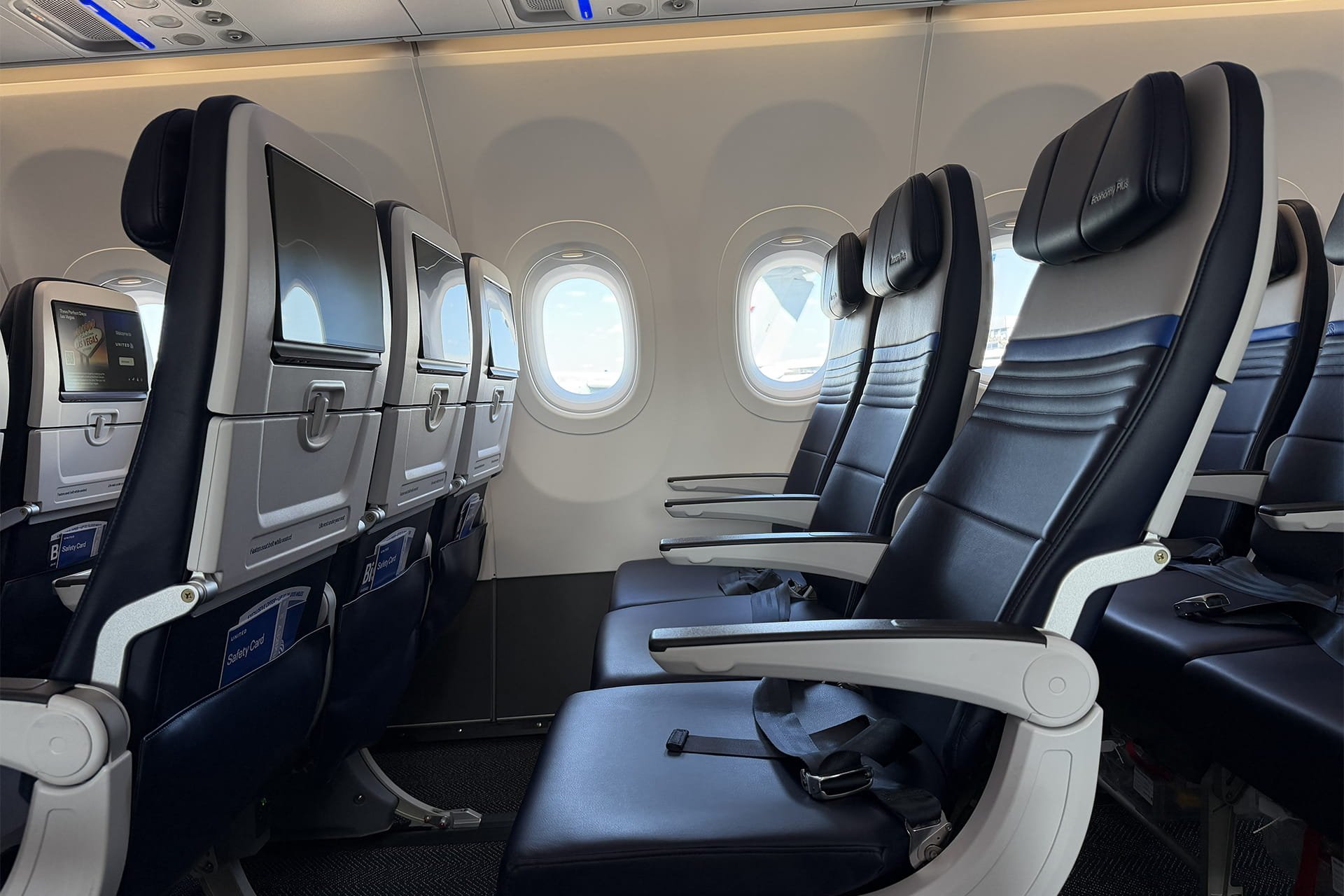
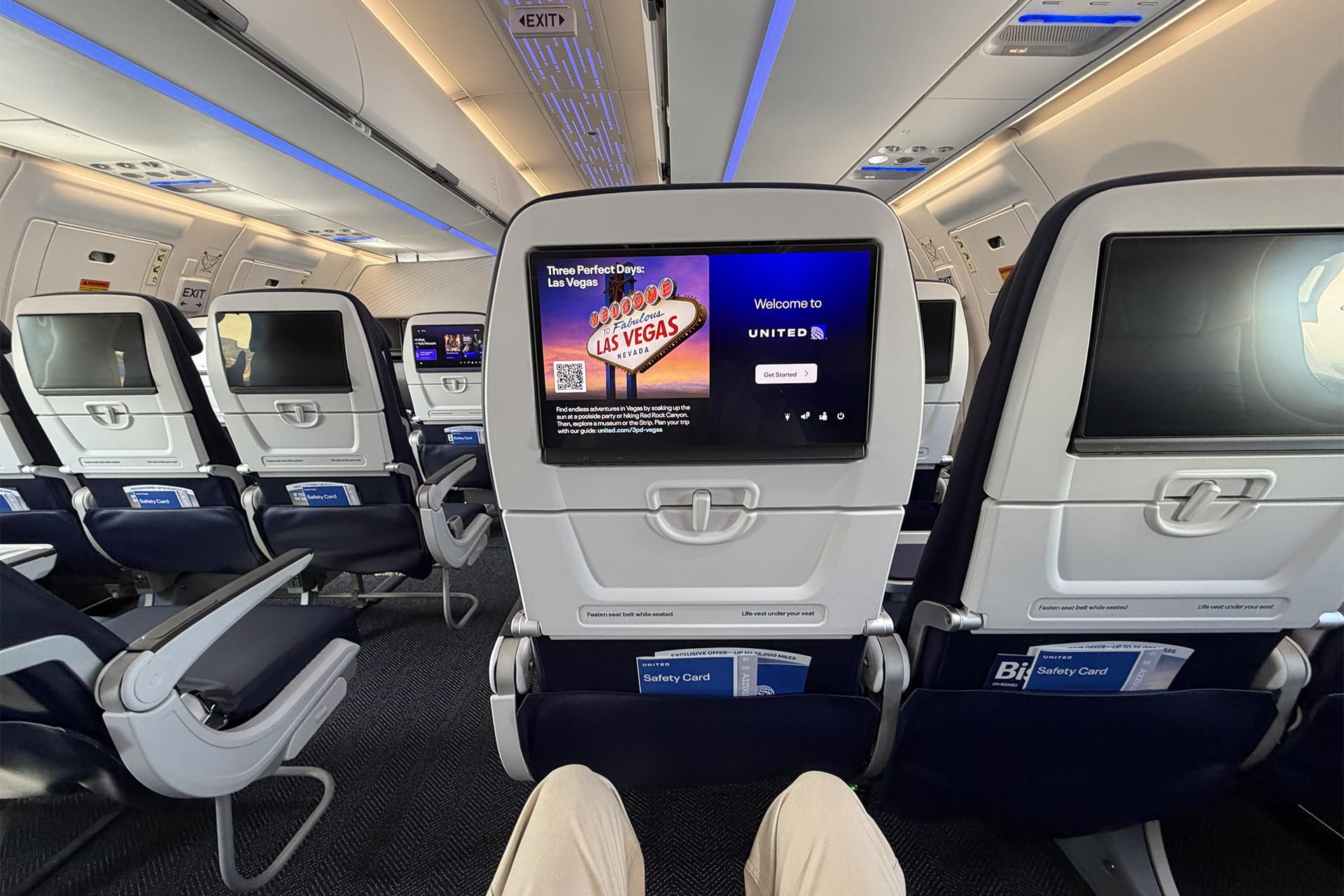
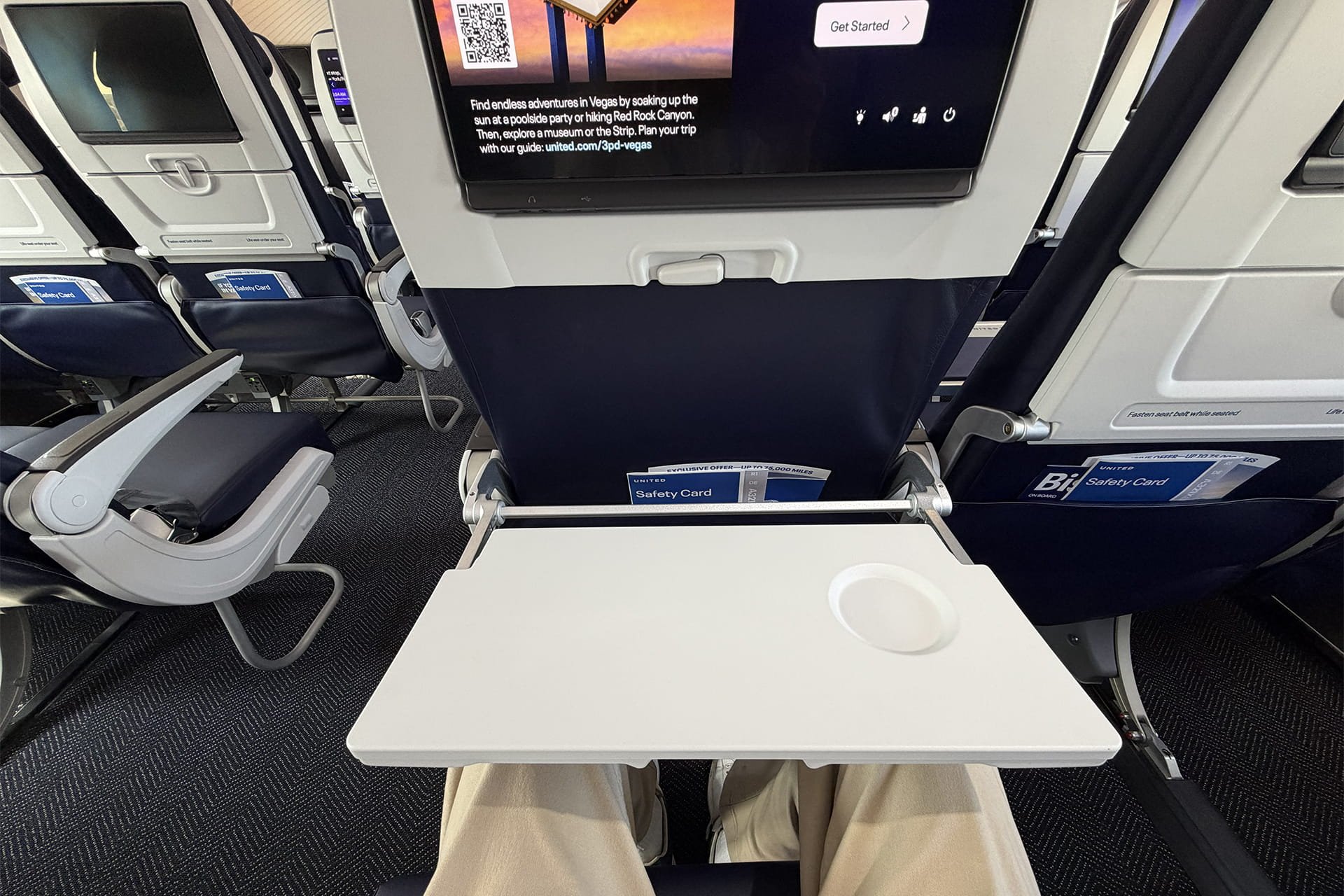
Regardless of the option selected, each main-cabin seat features a 13-inch 4K OLED display powered by Panasonic Avionics' Astrova platform, with Bluetooth connectivity for personal wireless headphones. Each seat also includes a standard tray table and two USB-C ports, while two universal power outlets are shared between every group of three passengers.
Beyond the individual seat, passengers throughout the aircraft benefit from Airbus Airspace XL overhead bins. Designed to accommodate more standard rollaboard bags stored vertically, the larger bins should reduce the need for gate-checking and partly alleviate one of the traditional boarding constraints associated with single-aisle aircraft. Their effectiveness under real operating conditions will nevertheless depend on passenger load, baggage volume and boarding discipline.
Wi-Fi connectivity is also a major aspect of current long-haul expectations. United says the A321XLR will be equipped with Starlink connectivity, with free access planned for MileagePlus members. This onboard connectivity can partly offset the lack of a widebody-style shared space by keeping passengers connected and entertained at their seats. However, Starlink could not be tested while the aircraft was on the ground at Farnborough, meaning its speed, reliability and performance under real operating conditions remain to be assessed.
The rear galley includes a compact self-service snack bar, but it is not comparable with the lounges, staffed bars or larger stand-up areas available aboard certain widebody aircraft. It serves as a practical refreshment point rather than a genuine social space.
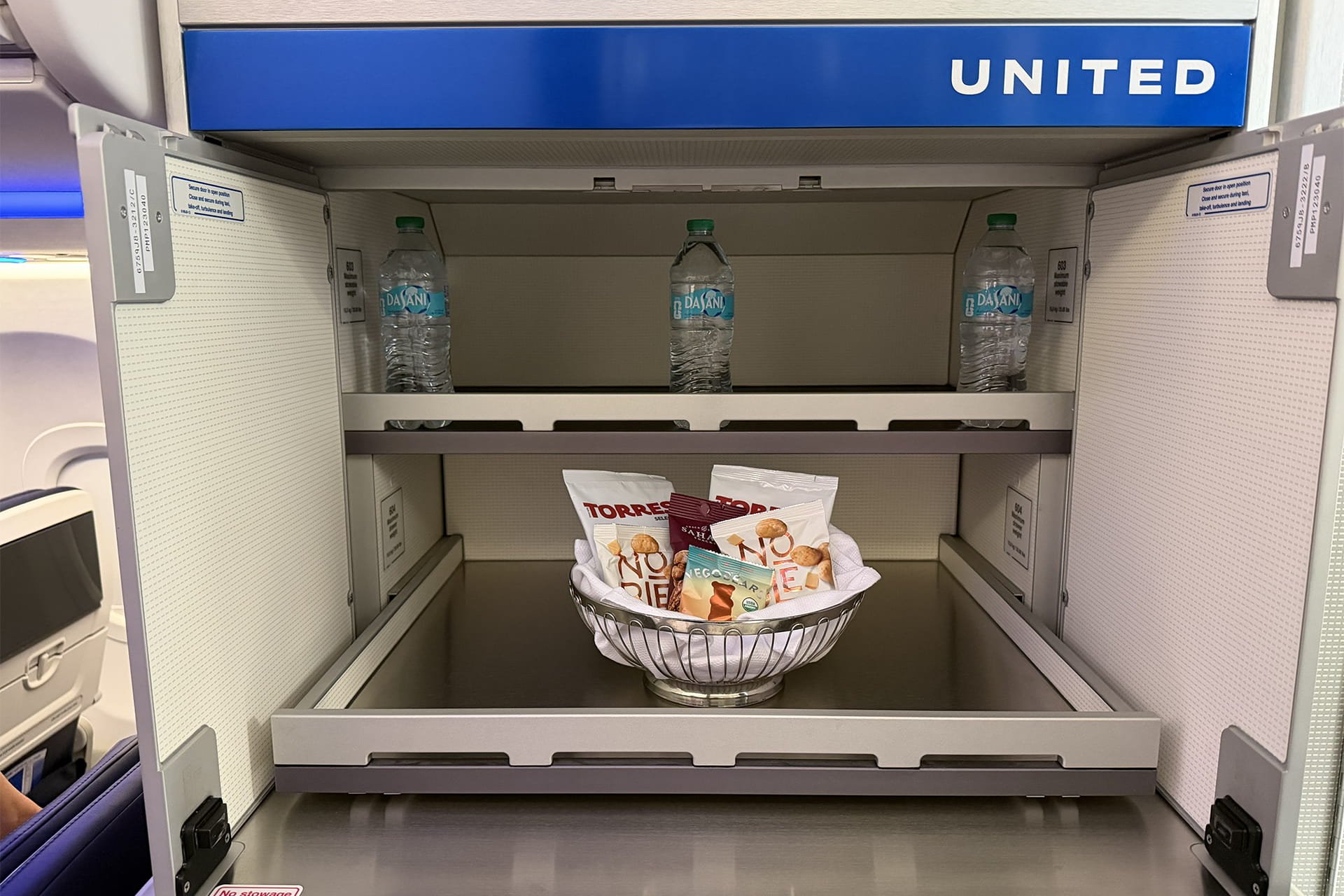
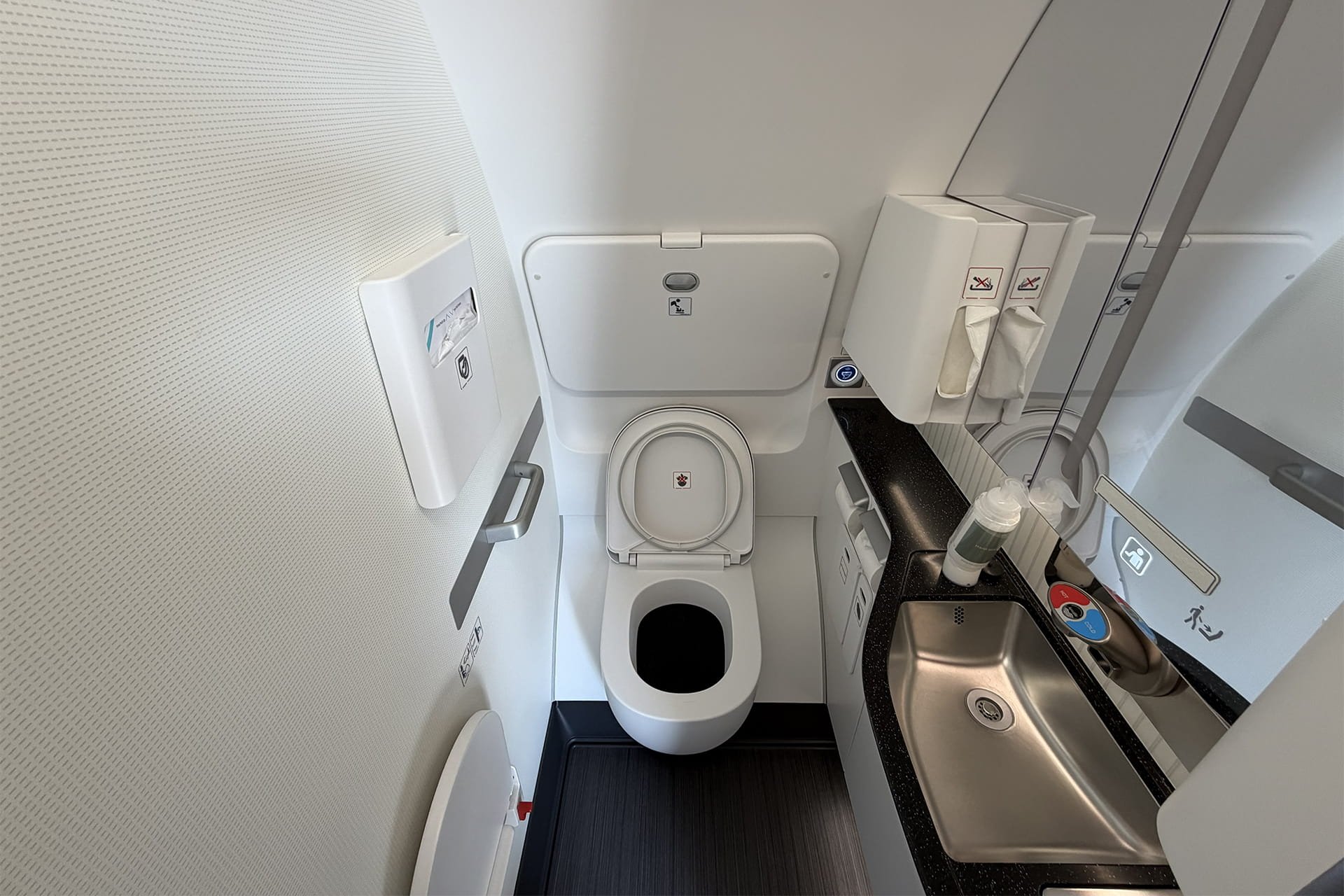
The seat-level experience in Economy may be broadly comparable with a modern widebody, particularly where a large screen, multiple charging points, and additional legroom options are offered. The difference becomes more apparent beyond the seat. With a single aisle, less distributed lavatory provision and limited circulation space, disruption during meal services and queues around the rear galley may become more noticeable on a long-haul flight.
The most significant difference between the A321XLR and a conventional widebody is not necessarily the seat, but the space around it. A single aisle means passengers and crew share one route through the aircraft. During peak periods such as meal services, a trolley could restrict movement between cabins and complicate access to lavatories, while queues may become more visible to nearby passengers.
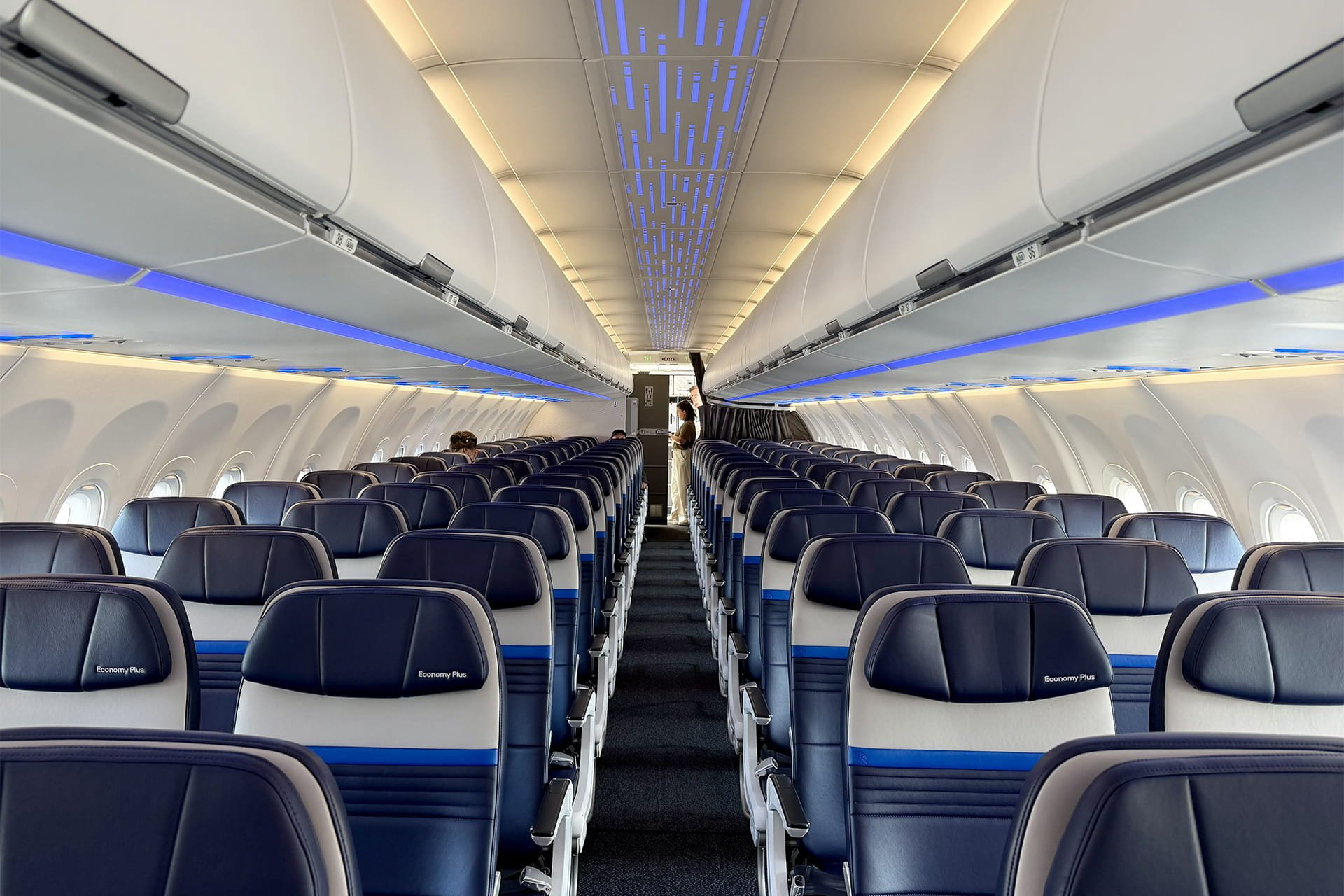
Similar constraints may affect the pace and feel of the journey. Widebody aircraft generally offer greater galley capacity, more lavatories, and more space for passengers to stretch or move away from their seats. The A321XLR's smaller cabin may feel more intimate, particularly in Premium Plus, but it cannot offer the same freedom of movement or range of shared spaces over a long-haul flight.
Catering quality is not determined by aircraft size alone, and United's complete long-haul service proposition aboard the A321XLR remains to be seen. However, a smaller galley and a single aisle may give crew less working space and fewer alternatives when delivering meals, clearing trays, or responding to passenger requests. On a widebody, service can be distributed across multiple aisles and larger galley areas. On a narrowbody, the process is more concentrated, and disruptions may prove harder to avoid.
Boarding and disembarkation may also expose the limitations of the single-aisle layout. Passengers stopping to stow cabin baggage can hold up everyone behind them, while overtaking or moving around families and passengers requiring assistance is considerably more difficult than in a twin-aisle cabin. United's relatively low-density 150-seat configuration may reduce the scale of that congestion, but it cannot eliminate the fundamental bottleneck created by a single aisle.
United's configuration demonstrates that a single-aisle aircraft can accommodate most of the individual features now expected from a premium long-haul product. The relevant comparison is therefore no longer simply between a narrowbody and a widebody seat, but between the complete experiences delivered by the two aircraft types: comfort, privacy and technology at the seat, alongside circulation, service flow and access to shared facilities across the cabin.
On United's A321XLR, the seat-design compromises imposed by the narrow fuselage are most apparent in Polaris. The aircraft delivers the essential elements of a current-generation business-class product, including a lie-flat bed, direct aisle access, modern IFE and personal storage. Yet the tighter real estate affects the dining table, the degree of enclosure provided by the door and the passenger's ability to move freely while seated.
The narrowbody layout can also create advantages. In Premium Plus, the 2-2 configuration eliminates middle seats, giving the small cabin a more intimate feel than some wider Premium Economy layouts. In Economy, modern IFE, charging points and a meaningful Economy Plus offering can make the seat-level experience competitive with many widebody products.
The A321XLR is most compelling when it operates nonstop routes where a widebody would be too large or uneconomical for carriers. On those thinner long-haul markets, a premium-heavy narrowbody such as United's can represent a significant improvement over either an indirect itinerary or a direct flight operated by an aircraft equipped with a more conventional short-haul-style cabin.
The experience becomes more compromised when a narrowbody replaces a well-configured widebody on a route where passenger demand supports one. In that setting, the passenger may receive a competitive seat but lose some defining advantages of a widebody: easier movement, more shared facilities, greater galley capacity, and a less constrained cabin environment.
United has not yet announced the specific routes on which its A321XLR will initially operate. The aircraft is expected to enter domestic service in late 2026 before beginning international operations in early 2027. Its eventual deployment will determine whether this configuration becomes a convincing way to connect thinner international markets—or a passenger-experience compromise on routes where demand could otherwise support the greater space, flexibility and shared facilities of a widebody.
Featured image by Flightreviews.net